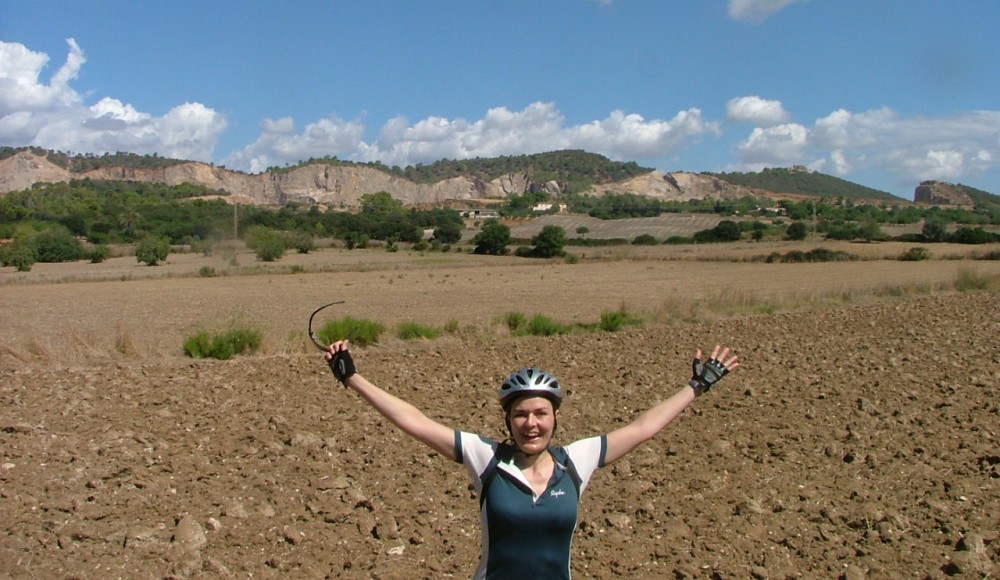
A load of cobbles – cycling to watch the spring classics

Readers of my last post will know that I’m a big fan of the Tour of Flanders and make the trip to Belgium to watch it live each year.  This year was no exception, but rather than repeat the sportive-on-Saturday-watch-on-Sunday long weekend in Bruges that we’ve done for the last couple of years, my husband John and I decided to try something different this time.  Inspired by our experience of cycling from London to Paris last year, we turned our annual pilgrimage into a cycle tour of Western Flanders and parts of northern France, taking in the Scheldeprijs and Paris – Roubaix races as well as the Tour of Flanders and other highlights of this lowland.

It will take me several posts to regale you with all the tales from this adventure, so I’m going to start with the story of how we got to Bruges, starting point of the Tour of Flanders and therefore our initial destination.  In previous years we have travelled there from London on Eurostar, but we found it immensely satisfying and very straightforward to ride there under our own steam this time.  The journey took us a couple of days, so if you’re considering doing the same (which I’d heartily recommend) I hope you’ll find the following tale of half-arsed preparation and lessons learned informative!

The road from Canterbury

The biggest headache of any “London to…” cycling itinerary is usually getting out of London, so we decided to start instead from Canterbury, taking the 10.20am train there from London Victoria, on which bicycles are permitted.  From there we picked up the cycle route towards Dover, which I believe mainly follows regional cycle route number 16.  Personally I like the security of a paper map in addition to online sources; if you’re the same the route is clearly marked on map number 179 of the Ordnance Survey Landranger series.

Although not traffic free, the route is mostly along quiet country roads through rural Kent, which was just starting to show the first green shoots of spring on a cool but sunny day.  Part of the scenic route is shared with the North Downs Way and trundles through farmlands and small villages, some of which were still loaded up with sandbags following the recent heavy rains and flooding in the area. One of the joys of cycle touring is the unexpected places you stumble across along the way, and sure enough we found ourselves having a delightful alfresco lunch at The Duck in Pett Bottom, a pub mentioned in James Bond’s “obituary” in “You only Live Twice” (Ian Fleming apparently wrote the novel whilst living in the village).

The Duck

The Duck at Pett Bottom

We were booked onto the 4pm ferry to Dunkirk and as the route to Dover looked to be a straightforward 35km run we were initially confident of making it there in plenty of time.  Inevitably though we had spent an obligatory half an hour or so trying to find the right route out of Canterbury and lost a little more time having an overly leisurely lunch.  The realisation that we were probably going to miss the ferry set in at almost exactly the same moment that the route started to become more undulating; not massive hills by any means but they felt almost Pyrenean when in a hurry and loaded with full panniers!  At quarter to four we finally reached Dover castle and shot down the steep hill into town like Vincenzo Nibali after a bank robbery.

After negotiating the at times terrifying cycle route into the port (at one point you are required to follow a red line along the right hand side of the road – exactly where all the lorries are steaming along) and exchanging various bit of paper with men in various prefabricated buildings, we were comically late for the ferry.  Fortunately it didn’t seem to be in any hurry to leave on time and there were plenty of vehicles, mainly lorries, still rolling on when we flustered our way to the dock.  We locked up our bikes in the racks provided on a lower deck and headed up to the almost spookily under-populated passenger deck for a relieved beer.

Finding Dunkirk

A couple of hours later we docked in Dunkirk but it was another hour before we could disembark, as all the lorries were let off before us for obvious safety reasons.  The clearly signposted and segregated bicycle lane to the town centre that I had been hoping for was nowhere to be seen, so we rode a couple of miles along the main road out of the port until we hit a T-junction next to an oil refinery whose gas flares burned eerily in the encroaching twilight.  It wasn’t obvious where to go next but we turned left at this junction and after another couple of miles picked up a bike path that led along the top of a dike towards town.  What we hadn’t anticipated was that it was a good 15km or more from here until the town centre, which meant a surreal but highly memorable ride for over an hour in darkness, the sound of the surf rolling in at our left competing with the roaring of oil refineries to our right, any smell of sea air obscured by their sulphurous emissions.  It was like cycling in Bladerunner.

After the traditional half an hour cycling around the deserted town centre looking for our hotel, we checked in and went out for dinner at a nearby brasserie on Place Jean Bart which was pretty much the only place open at this late hour but was fortuitously serving a delicious special of chicken and cous cous (much better than it sounds!) and a good selection of Belgian and northern French beers.  Just the ticket at the end of a long day.
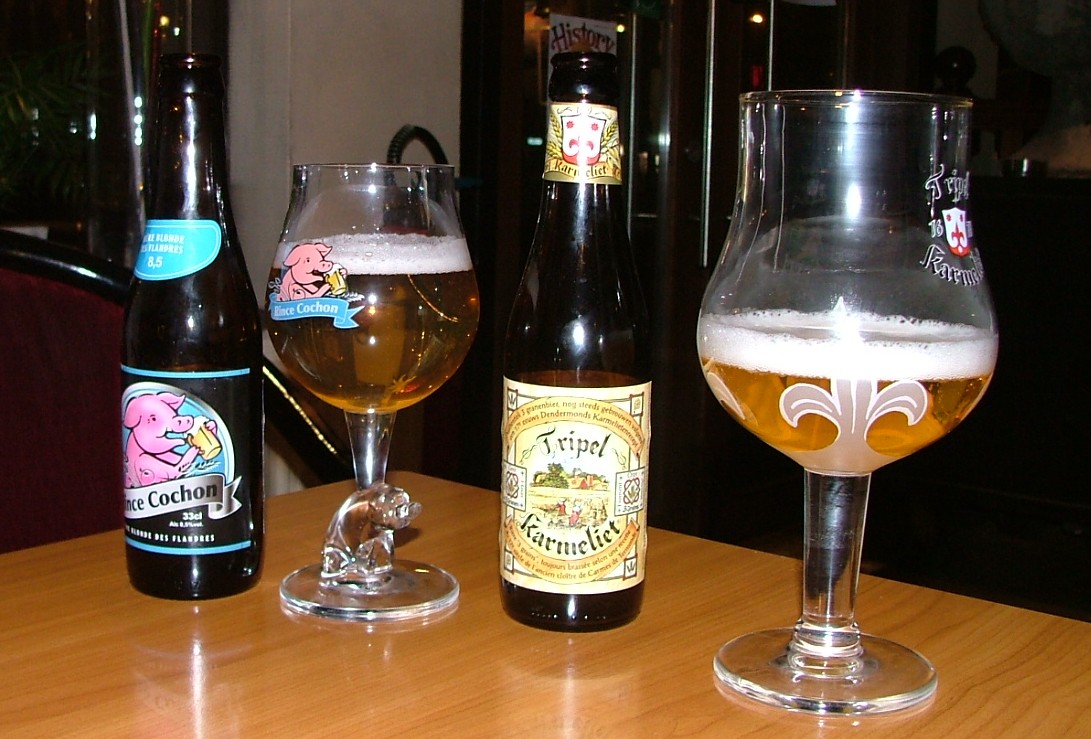
The first of many!

The first of many!

Bruges or bust (accidentally via Ostend)

Dunkirk was a bit more lively the next day and friendly locals, seeing our panniers, were curious about our journey.  We needed to reach Bruges by the end of the day and still had a way to go, so headed north along the coast towards the border with Belgium near De Panne.  At first the route hugged the shoreline, a poker straight line between sand dunes and a broad sandy beach exploited by land sailors and kite fliers.  After a while it turned inland, conveniently passing a patisserie just in time for breakfast, before winding through pockets of woodland and mothballed holiday camps where signs in English remind dim-witted British tourists to drive on the right.

Before long we arrived at the border and took the first of numerous wrong turns, confounded by the array of equally appealing cycle paths to choose from, mostly purpose built and traffic free. Belgium is covered in an extensive network of dedicated cycle routes that will make any British cyclist used to strips of pot-holed tarmac at the edge of busy roads that evaporate just as you arrive at a busy junction weep with pathetic gratitude.  Routes are numbered and constantly interconnecting without necessarily spelling out which towns they are leading to, so even though cyclists are so well catered for you do need a map to find your way over any distance.  Detailed printed maps of the Belgian cycle path network (or Fietsroute Netwerk) are available to buy in tourist offices; we bought ours in advance from the ever marvellous Stanfords.
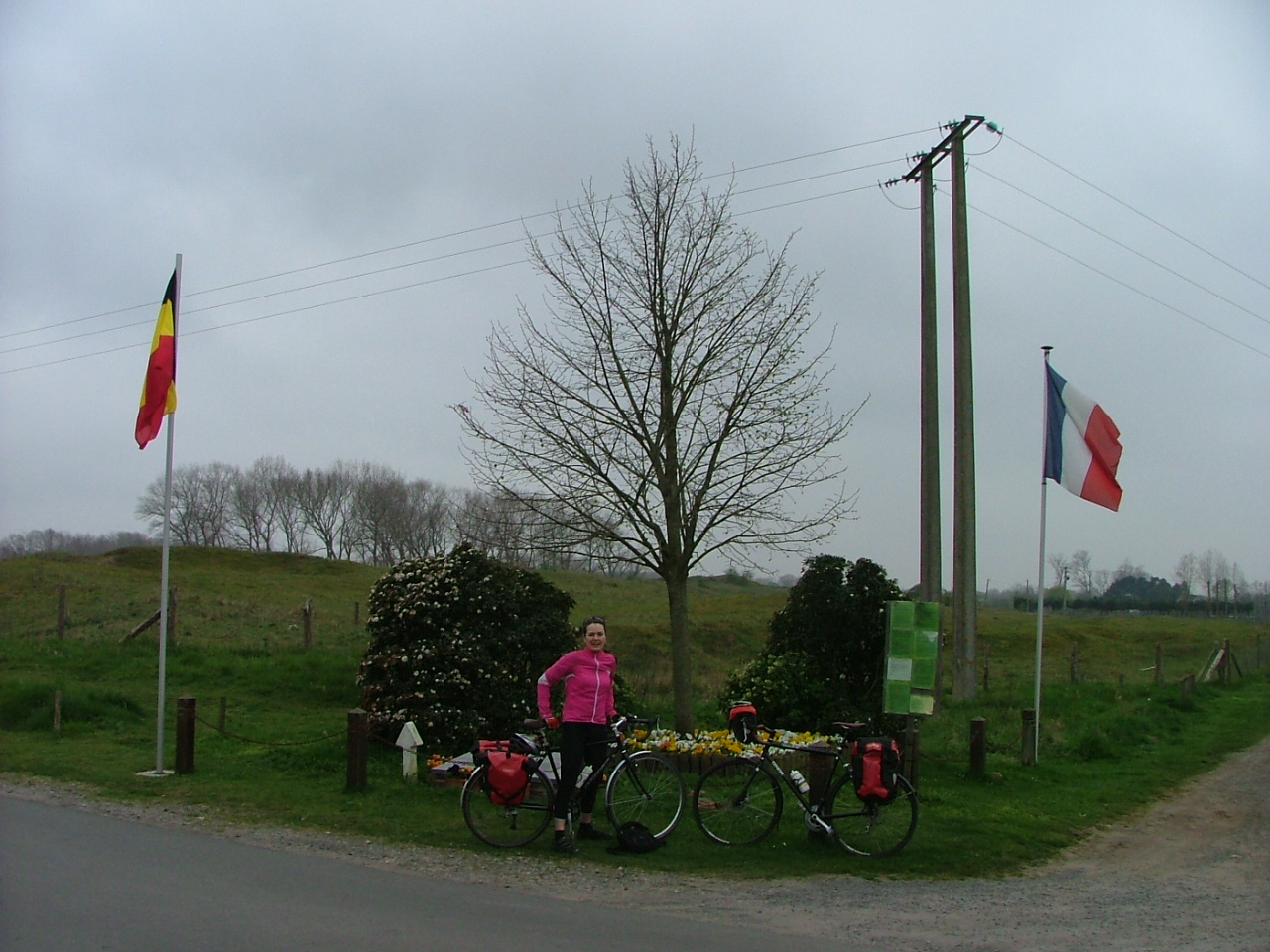
If it's Tuesday this must be Belgium

If it’s Tuesday this must be Belgium

From here we decided it would be worth making a relative diversion further inland towards the town of Veurne for a spot of lunch.  Like its more famous neighbours Bruges and Ghent but on a smaller scale, Veurne sports all the typical features we’ve come to know and love from an historic Flemish market town, including a cobbled market square lined with restaurants and bars in old gabled townhouses, a Unesco listed belfort, town hall and a couple of churches.  As much of the Belgian coast is otherwise unremarkable, Veurne is well worth a trip if you’re in the area.
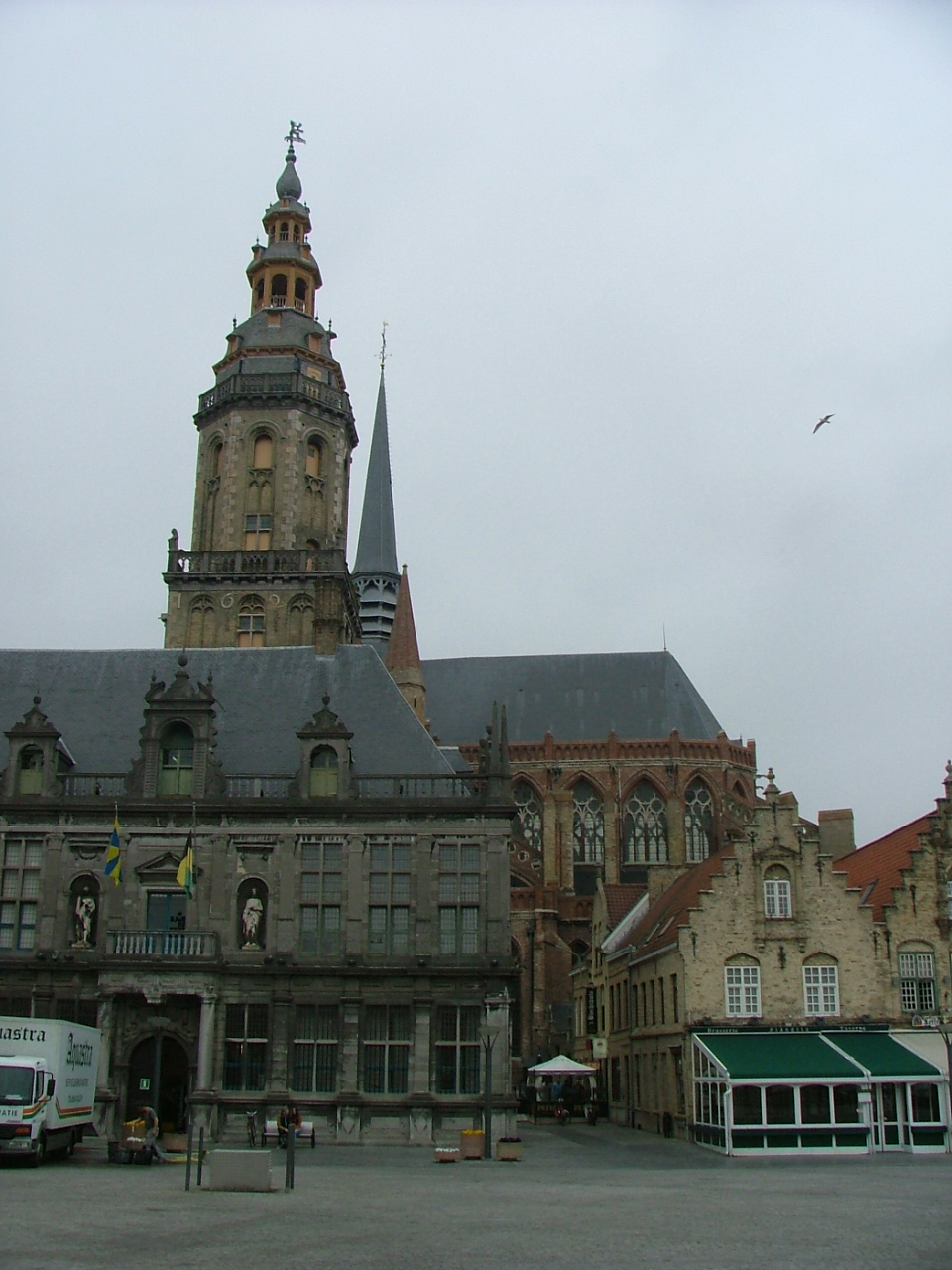
Veurne's 17th century belfort, a Unesco World Heritage Site.

Veurne’s 17th century belfort, a Unesco World Heritage Site.

At this point we went a little off-piste, as our collection of maps didn’t cover the relatively small area between Veurne and Oudenburg, where we knew we could pick up a path to the main Gent-Brugge-Oostende canal that would take us all the way to Bruges.  However, we were reasonably confident that if we followed the canal from Veurne towards Nieuwpoort, we could pick up another path from there to Oudenburg.  And so we set off along the first of many canal-side cycle paths, dodging the occasional sheep wandering across from neighbouring fields.
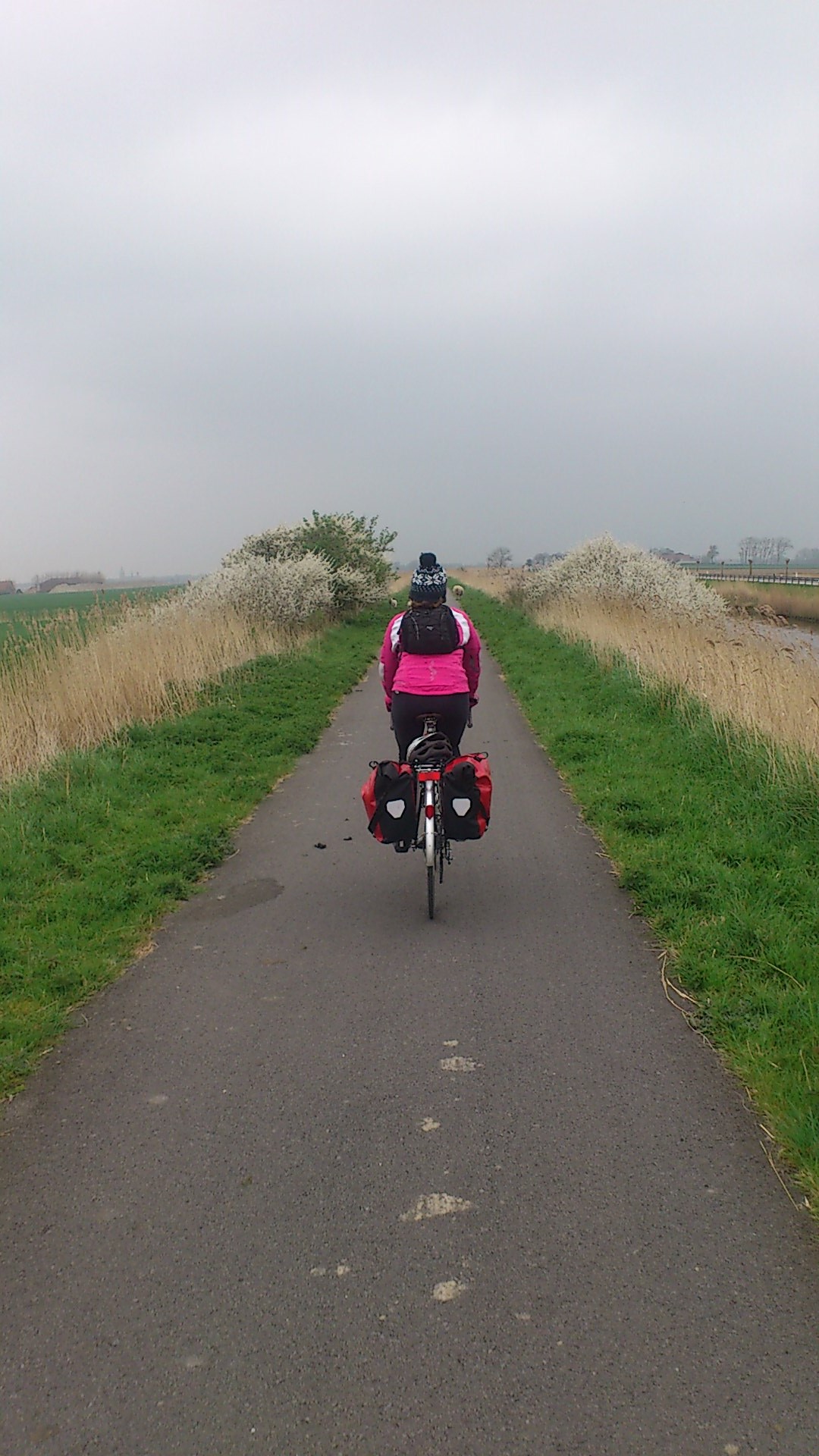
Even with paths like this, we still managed to get lost.

Even with paths like this, we still managed to get lost.

It was whilst deliberating whether or not to ignore a sign that wanted to divert us away from the canal we thought we needed to follow that we met Kris.  Kris was a passing cyclist, a friendly Flemish fellow who was determined to help us whether we liked it or not.  Were we looking for the sea, he wondered.  On learning that our ultimate destination was Bruges, Kris was insistent that we should ride along the seafront all the way to Ostend and pick up the canal from there: “I will show you!”.

Despite recovering from his second hip replacement in as many years, Kris could cycle (for rehabilitative purposes) at a decent pace and deftly guided us to the coast at Westende, about 15km down the coast from Ostend.  As he had promised, it was possible to cycle from here along a traffic free promenade all the way to Ostend, which anyone who has choked on fumes whilst trying to have a nice ride along Brighton seafront on an average weekend would definitely appreciate.  It’s not a particularly attractive stretch of coast though – there’s a lovely wide beach of white sand but the Belgians have attempted to make the most of their relatively short stretch of coastline by building an almost continuous stretch of rather unforgiving high-rise hotels along its length.

Still, the coast is not without its attractions and I imagine it’s a lively place in summer.  Around Middelkerke there is a procession of bronze statues of cartoon characters, which is added to each summer when the annual comics festival is held there.  Belgium has a long and illustrious history of comics – according to Wikipedia (so it must be true), comics constitute 14% of annual book sales in Flanders.

That's not Tintin

That’s not Tintin

Just outside Ostend there was a break in the endless stretch of hotels to accommodate the site of the Atlantic Wall sea defences rebuilt by German occupying forces in World War II, the bunkers and gun emplacements clearly visible between the dunes from the roadside.  Shortly afterwards we arrived in Ostend proper, passing the grand but slightly faded Thermae Palace Hotel.  This 1930s spa hotel was the setting for cult saucy vampire movie Daughters of Darkness.  There is also an amusingly Z list walk of fame on the promenade outside.

Big in Belgium?

Big in Belgium?

Ostend looks to be a lively place but as we’d not intended to be there in the first place we were keen to press on to Bruges.  We found a cycle route along a canal that seemed to be heading roughly the right way, and when it started branching off in various directions we followed some earlier advice from the ever-helpful Kris and followed the signs in the direction of  Bredene Sas.  Sure enough, a brief diversion to avoid a mysteriously absent bridge aside, we were soon rather triumphantly picking up our first signs to Bruges and for the rest of this day at least we were done with getting lost.  After a few well-signed miles on segregated bike paths through the industrial outskirts of Ostend, we finally made it onto the quiet canal-side tracks that we’d been craving, which covered the final 20km or so all the way to the heart of Bruges.

Finally on the right track

Finally on the right track

We’ve been to Bruges a few times now and it’s always a pleasure to be back, so much so that I intend to dedicate all of my next post to the city and the marvellous cycling opportunities to be found in its environs.  For now I will simply say that we celebrated the end of a long but interesting and very satisfying day in the saddle with rather too many delicious Belgian beers in some of the many obliging hostelries of Bruges and had a well deserved lie in the next day!

Not the first time I've travelled home on a beer scooter!

Not the first time I’ve travelled home on a beer scooter!


How to watch the Tour of Flanders

Every time somebody wants to make an easy point about the increasing popularity of cycling in the UK, they talk about the amazing crowds that amassed along the route of the Olympic road race in 2012 or when London hosted Le Grande Depart in 2007.  When you think about it though, it would have been weirder if there hadn’t been a terrific turnout for these events, given that both the Olympics and the Tour de France are renowned major global sporting events that are free to watch from the side of the road.  Ask your typical Brit if they’ve heard of the Tour of Flanders however, and they’ll blink and ask if you meant to say the Tour de France.  Yet on the first Sunday in April each year a corner of Belgium comes alive as over 800 000 people line the streets, country lanes and cobbled farm-tracks of Western Flanders to cheer on the protagonists of a bike race like no other.  All cycling fans owe it to themselves to go to Belgium to soak up the incredible atmosphere of the Tour of Flanders at least once in their lives.  If you’re anything like me you’ll end up going back time and again.

What’s it all about?

Pro cycling is a big deal in Belgium, especially Flanders.  Only France and Italy have more nationals riding in the ProTour peloton than Belgium, a nation that has produced some of the greatest racers the sport has ever seen, including five-times Tour de France winner and cycling’s nonpareil Eddy Merckx.  Merckx is also one of just three men to win all five Monuments, along with fellow Belgians Roger de Vlaeminck and Rik Van Looy.

Flanders 13 058

Banner seen in Bruges at the time of the 2013 Tour of Flanders

The Tour of Flanders, or the Ronde van Vlaanderen to use the local name, is one of said Monuments.  In a country with more bike races than you can shake a stick at, the Ronde is considered the most prestigious; any son of Flanders would take a win in the Ronde over the Tour de France any time and 68 of the editions run annually since 1913 (except during World War 1) have been won by Belgians.  The Ronde is raced in a single day over more than 250km but what makes it Monumental and extremely tough to win are the hellingen; short but very steep climbs, often cobbled to add to the fun, that sap the riders’ strength and make the race difficult to control.  The winner is usually a hard man who can deal not just with the repetitive climbing and cobbles but also the constant battle for position to be at the front of the group on the narrow and technical approaches to the climbs. Combined with a nervous peloton on one of the biggest race days of the year, this unique course generates frequent crashes, and riders who get stuck behind one are likely to see any chance of victory disappearing up the road without them.

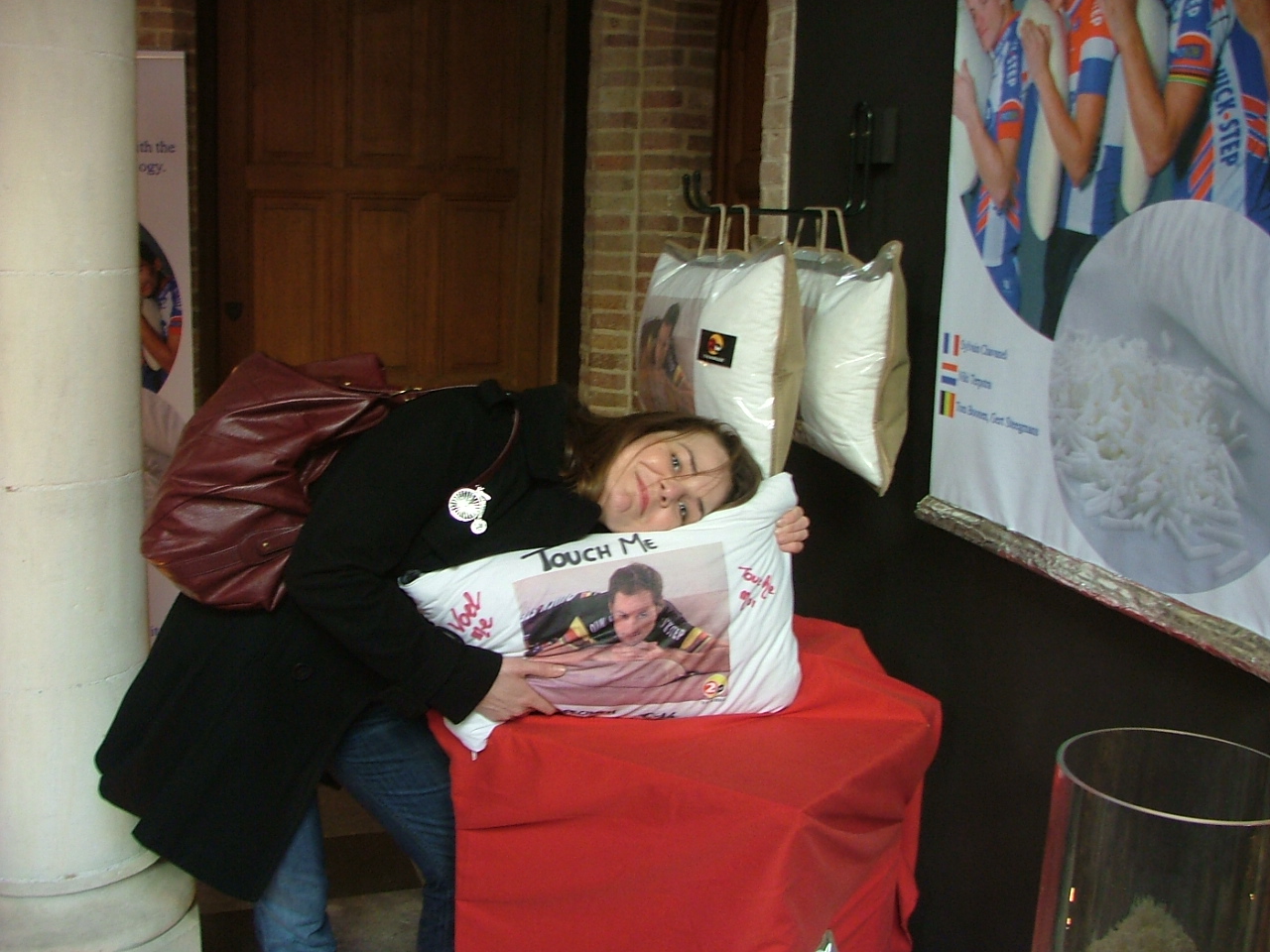
The nature of the route means the race is usually a great one to watch but what truly makes it unique is the passion of the local fans for cycling in general and their favourite race in particular, which has to be seen to be believed.  The day of the Ronde has the atmosphere of a national festival – it feels like half the country is having a day out watching the race (and they probably are), and everybody has an opinion on who is going to win (although most locals will probably say “Tom Boonen”, a national superstar and three-time winner who can barely set foot out of the door without being papped.  His visage even makes it onto pillows of questionable quality in gift shops that otherwise mostly sell beer).

Xmas 2010 038

“Official” Tom Boonen merchandise

If you just happened to be visiting somewhere like Bruges for some chocolate and beer tourism on Ronde weekend, it would be hard not to notice that something was up. Daily newspaper Het Nieuwsblad publishes a 24 page pullout on the day before the race, featuring rider interviews, punditry, predictions and all sorts of other minutiae – worth picking up even if you can’t read Dutch as it contains details of the race route and timetable, and it usually comes with a freebie like a souvenir bidon or even a can of beer specially packaged for the occasion.  The race result usually makes front page news in the Monday edition too, with more full-colour pull-outs making it a good souvenir.

2011 even saw the production of a TV mini series called – what else? – De Ronde, based around a series of fictional events that culminated on the 2010 race day.  I even found myself watching this at one point – after enough pints of Kwaremont (yes, there’s a beer named after one of the race’s most iconic climbs), you start to convince yourself you can understand Dutch but in truth I have no idea what the program was about.

The sign-in

The route of the Ronde has changed many times over the years but since 1998 it has started in Bruges, or Brugge in Dutch. This medieval gem needs little introduction, but should anyone need one I’m intending to do a separate post about it at a later date, as it’s a great place to spend a few days and base yourself for some cycling in the region. Thousands of people fill the Markt before the start of the race, which is a good place to experience the excitement generated by the local fans and see an all-star list of professional cyclists in the flesh and up close.

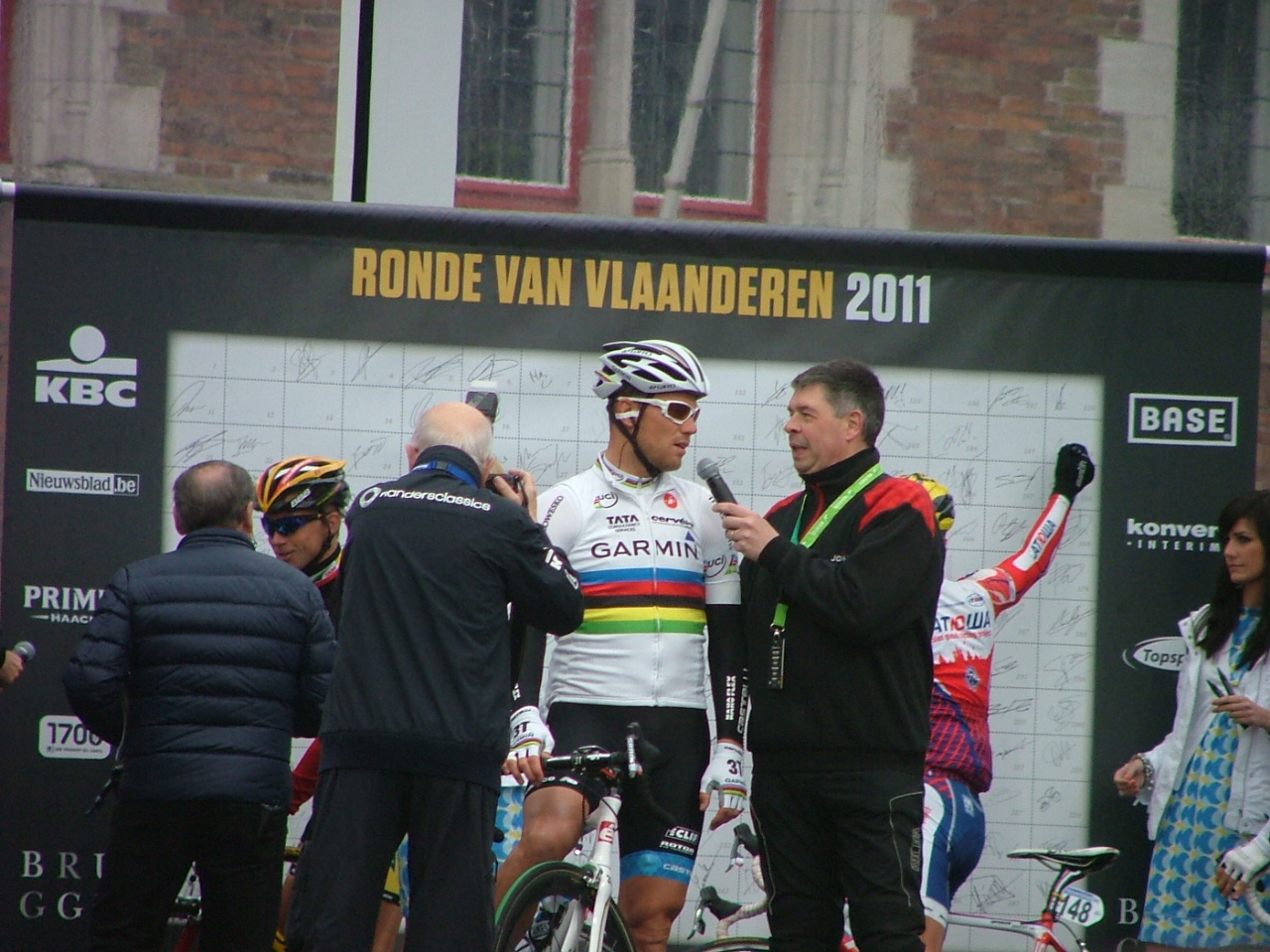
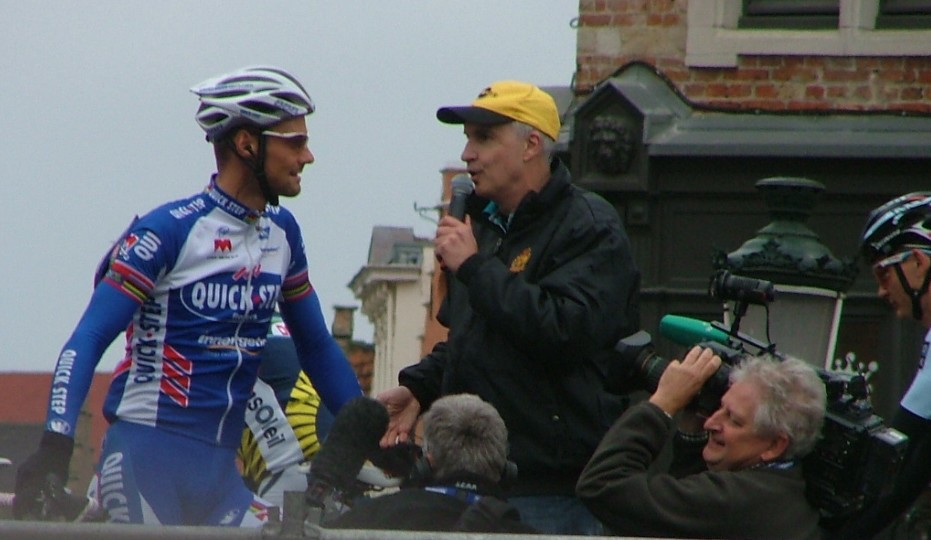
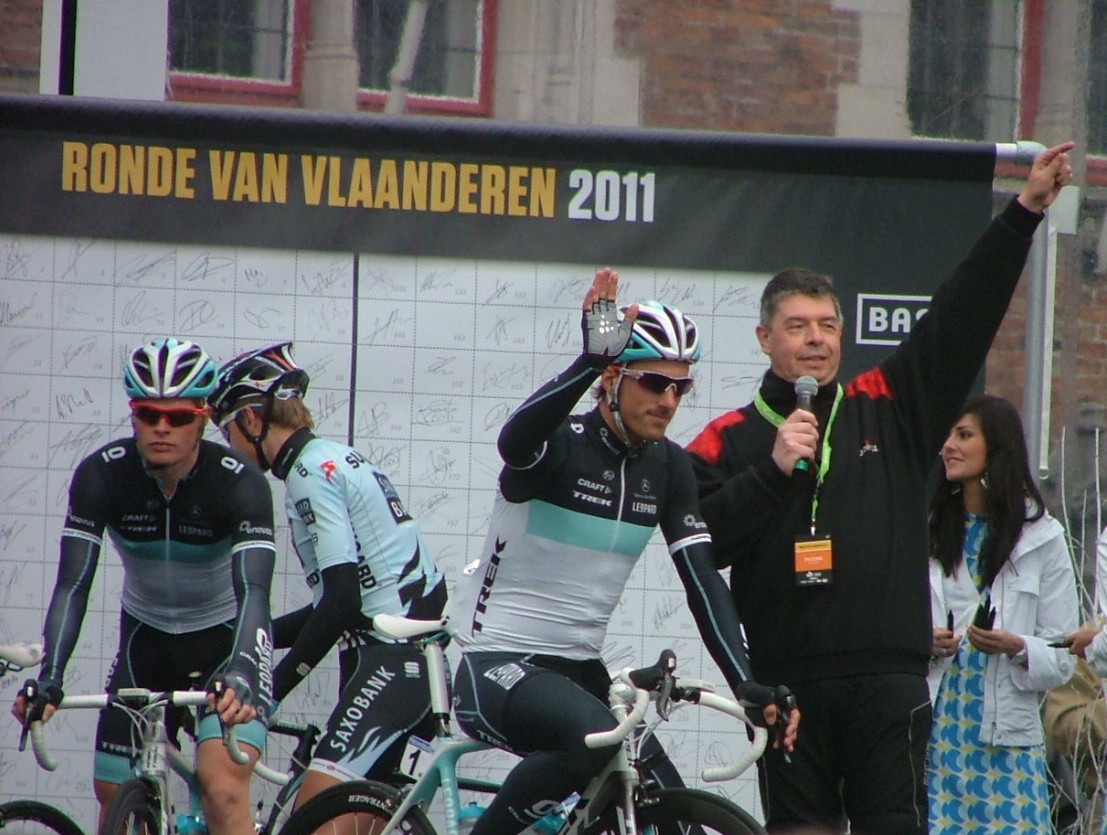
On race day, a stage is erected for the occasion in front of the Belfort in the Markt, where the riders sign in for the race.  They pedal up a ramp on the right hand side, possibly get flagged down for an interview if they are famous or just plain Belgian, then pedal off through the middle of the crowd – barriers are set up to demark the way, so it’s obvious where to stand for a good view of this.

Xmas 2010 074

World champion Thor Hushovd signs in in 2011

In between rider interviews a live band plays music verging on oompah that presumably appeals to some Belgian demographic or other.  Ronde legends like three-time winners Eric Leman and Johan Museeuw and world champion turned museum curator Freddy Maertens are wheeled out to give their predictions (Boonen, Boonen, Boonen) to fill gaps where necessary. Foreign riders are usually interviewed in English so foreign fans like me can still mostly follow what’s going on. The volume of riders signing in increases as the start time approaches; it was very cold last year so many riders left it as late as possible.  There is a noticeable ripple of excitement from the largely local crowd when Tom Boonen makes his entrance.

Xmas 2010 094

Tom Boonen gets flagged down for an interview before even making it to the stage

I like Tom Boonen, but I reserve my own personal ripples of excitement for this guy:

Xmas 2010 083

“No, I’m Spartacus”

Anyway, the race starts at 10am, so get down there for 9am at the latest, earlier if you want to get a good view. If you fancy a liquid breakfast you’ll be right at home, as some fans will have started on the Jupiler already. There’s usually people handing out yellow and black Flandrian lion flags and other souvenirs.  As 10 o’clock approaches, three or more helicopters start to circle the by-now packed market square, a claxon sounds and the race is off!

Where next?

The route of the Ronde is a convoluted one, winding back and forth through the Flemish Ardennes in order to string together a succession of climbs that sit in near proximity to each other to create over 250km of difficult racing.  The twisting nature of the route has traditionally lent itself well to viewing the race multiple times for those with local knowledge of how best to scamper from one helling to the next.

There are an increasing number of tour companies offering some variation on the theme of a Tour of Flanders weekend, usually combining the opportunity to ride the sportive on Saturday (more on that in a later post) with watching the professional race on Sunday.  Some of these packages offer places in the various VIP tents at strategic points along the route, others keep it old school and drive you from place to place so you can see the race pass several times.  I’ve never used any of these companies so can’t really comment – driving point to point with someone who knows what they’re doing sounds like it could be a lot of fun, but is being increasingly discouraged by the race organisers due to traffic jams as the Ronde gets more popular each year.  Also let’s be honest – seeing the race live is the whole point of going there, but if you actually want to follow it you need to see it on TV. For me the best way to experience any race is to soak up the atmosphere from a good spot by the course with access to a screen, so you can follow what is actually going on, punctuated with bursts of live action as the race zips by. The aforementioned VIP tents enable this experience but frankly I’m not sure there’s any point paying for one; there are plenty of free public zones at strategic parts of the course with big screens, beer tents and friet vans – what more do you need?

Once the race has left Bruges you will notice much of the crowd moving with great purpose in the direction of the train station – follow them.  To see the race again you need to get to Oudenaarde, which is the location of the finish line and the natural heart of the race since it was controversially rerouted away from Geraardsbergen in 2012.  Take a train to Kortrijk and change there for Oudenaarde.

2012 065

Oudenaarde loves the Ronde

Once there, one option is to follow the crowd into the centre of town, admiring en route the efforts of local businesses to dress their shop windows in celebration of the big day.  Oudenaarde has an impressive town hall  and market square, which is used as a place to park the team coaches on race day and therefore a place to stalk exhausted riders after the race.  It’s also the location of the Ronde Van Vlaanderen museum, where I’m hoping to spend some quality time this year.

The race is scheduled to pass through Oudenaarde between 12.30pm and 1pm, so you could hang about to see this plus a few impromptu warm up acts such as a pedal-powered bar, a mime artist called Bom Toonen and the occasional recreational cyclist who is just passing through and slightly embarrassed by the drunken cheer he’s receiving.  After this you could head to the nearby public zone by the finish line, or alternatively wander into the nearest bar, order a Leffe and watch the race on TV with a bar full of drunk Belgians.  Just remember to cheer for Tom Boonen.

Oudenaarde market square

Oudenaarde market square

Alternatively, if you want to see the pointy end of the race, you can take a free shuttle bus from Oudenaarde station up to the public village on the Oude Kwaremont.  This cobbled climb often proves significant to the outcome of the race, which passes through this point three times.

Geraint Thomas on the Oude Kwaremont

Geraint Thomas on the Oude Kwaremont

This is a great place to see the race – there are pubs, food and beer vans, a big screen, plenty of portaloos and room to stand by the road if you’re prepared to shuffle along a bit.  We had no problem switching between standing by the roadside and going back to the big screen with each passing of the peloton.  It was here that my friend Lisa and I were memorably told we were “commendable” for travelling all the way from London to see the race.

Flanders 13 070

View up the Oude Kwaremont

Shuttle buses also run to the Oude Kwaremont from Ronse and Kluisbergen.  The bus from Ronse also goes to the public zone at the Kruisberg.  There are further public zones at the Paterberg and Koppenberg, which aren’t serviced by shuttle bus, however this year the organisers have also devised bicycle routes between major points on the race, which I’m currently weighing up the pros and cons of  – more details of buses and bike routes can be found on the Flanders Classics website.

Getting there

My Ronde addiction is enabled by the accessibility of Belgium from the UK.  Eurostar runs from London St Pancras International to Brussels Midi, and your ticket will cover you for a transfer from here to anywhere in Belgium, so you can get straight to Bruges or anywhere else you want to visit first.

Want to take your bike? This is straightforward on Eurostar, you can either collapse it all into a bike bag and take it on as luggage, or what we normally do is register them as luggage in advance for £30 each way so we can simply ride off at the other end.  You can also turn up and register your bike on the day but there’s no guarantee your bike will travel on the same train as you – more details about bikes on Eurostar here.

You can take bikes on trains in Belgium but you need to buy a ticket for them, which costs either EUR 5 per journey or EUR 8 for unlimited journeys in a day.  Depending on what sort of train turns up, the bikes either go in the guard’s cabin behind the driver or in specially marked carriages.  It’s always slightly nerve wracking wondering if you’ve got the right end of the platform but generally there’s always a guard and people are very helpful.

What else?

There’s so much more I want to tell you about this race, how to ride the route, riding in Belgium generally and so on but I’ve probably bored you enough for the time being.  Tomorrow we’re setting off to see our fourth Ronde, travelling by ferry this time for a change, and extending our trip to see Scheldeprijs and Paris-Roubaix too, so there’ll be lots more from me in coming weeks!