“Maybe that’s what hell is, the entire rest of eternity spent in f*cking Bruges.” – Ray, In Bruges.
Well, really. Colin Farrell’s character in the 2008 comedy was not a big fan of this glorious medieval city, but then he was a potty-mouthed hit man who had botched his first job so we don’t need to entertain his opinion. It is the case though that Bruges (like Belgium in general) is often unfairly categorised as nice but boring, famous for chocolate and lace and not very much else. It may not be the party capital of Europe, or even Belgium for that matter, but for anyone who enjoys cycling of either the professional or more leisurely kind, Bruges is a city that rewards a visit time and again.
Why visit
Bruges grew prosperous in the thirteenth and fourteenth centuries by virtue of the cloth trade before slowly fading into obscurity when its link to the sea gradually silted up and the industry relocated to Antwerp. Bruges’ loss is our gain – the city effectively lay mothballed for hundreds of years until tourists rediscovered it in the nineteenth century, and the UNESCO listed historic centre is now a perfectly preserved medieval town unscathed by modern development.
The result is preposterously lovely, as if an improbably skilled theme park designer had been tasked with creating the ultimate medieval town and did it so perfectly that he had to be summarily executed afterwards to prevent him building a more beautiful rival elsewhere. Imagine a mini Amsterdam without the pornography and drug casualties. Boat tour companies ply their trade along the canals that encircle the historic centre, whilst bicycles rattle up and down narrow cobbled lanes indignantly ringing their bells at the rubbernecking tourists that blunder out into their path. Throw premium strength beer into the mix and it’s amazing there aren’t more pile-ups and/or watery ends.
Things to do in Bruges when you’re not cycling
You can cycle around Bruges of course, and I suggest you do. Its well-maintained streets are almost universally paved with good quality cobbles that are far more gentle on the behind than its more irregular cousins that pave the hellingen of the Tour of Flanders. A few hours is all you’ll need to ride around and across the compact old town and see its major sites.

Queen of the cobbles
The best way to appreciate Bruges though is through aimless strolling, stopping off at various tourist attractions and purveyors of fine beer as you stumble across them. A good a place to start as any is the large central market square overlooked by the magnificent Belfort (belltower), which affords magnificent views over the city to those with strong thighs for climbing stairs and a tolerance for confined spaces.
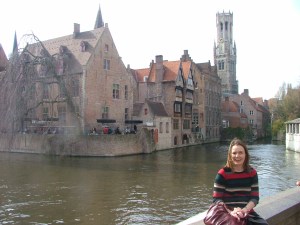
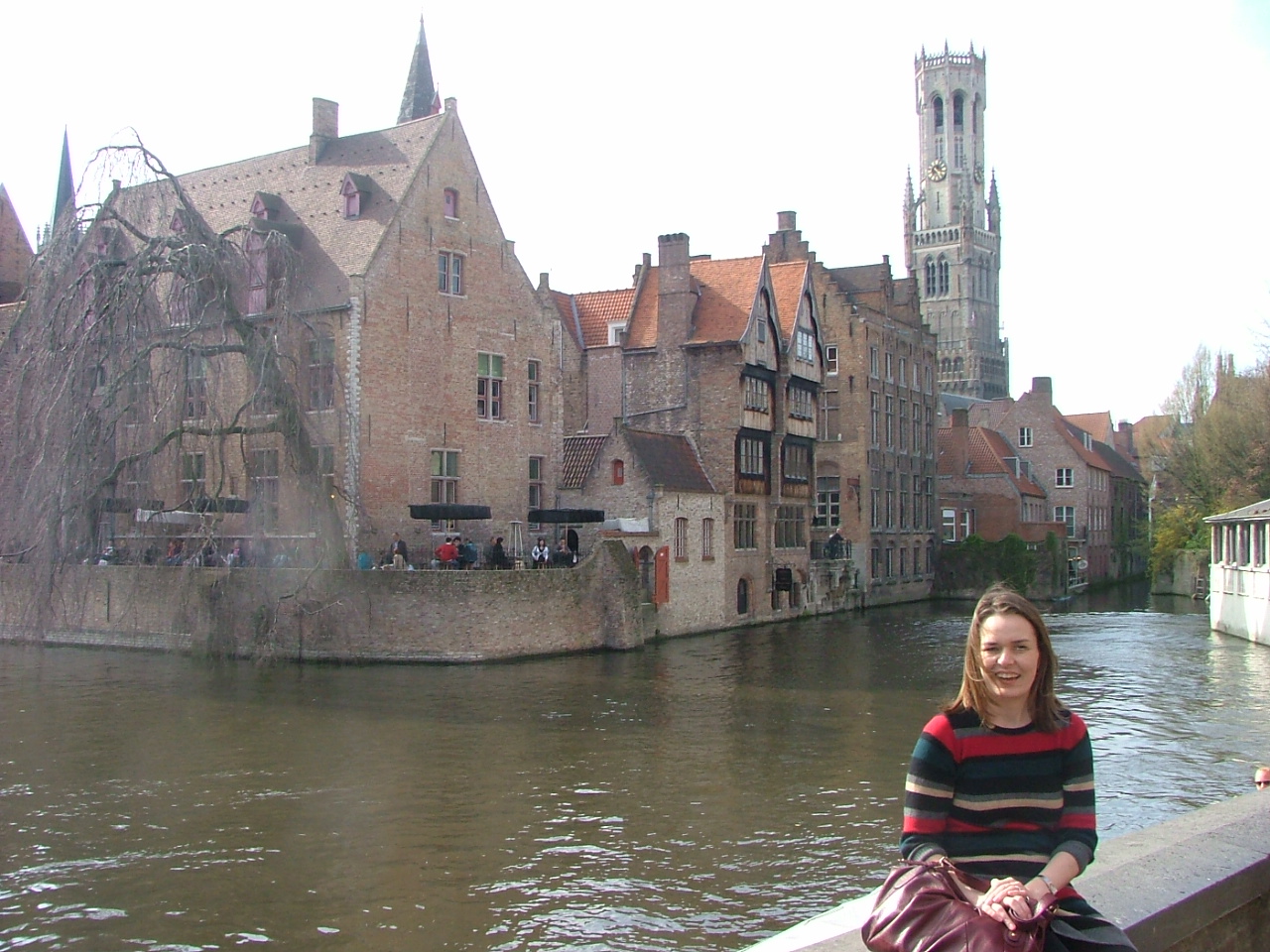
Most scenic pictures of Bruges feature the impressive Belfort
Impressive panoramic views can also be seen from the roof of De Halve Maan brewery in the southern end of town, the inevitable destination of many a wander through Bruge’s quiet back streets. A short tour of the brewery includes the roof top vista and a sample of Brugze Zot, the brewery’s delicious signature blond brew. Not far from here is the Minnewater area, a peaceful waterside park beside the tranquil begijnhof, a quiet cloister of whitewashed houses arranged around a garden that is carpeted in daffodils if you visit in spring time.

The peaceful begijnhof
Belgium is famous for its beer of course and another place where you can sample it that I retain a surprising soft spot for is 2be, a tourist trap gift-shop-cum-bar superbly located where main drag Wollestraat meets the canal. A 50 metre beer wall, displaying bottles of hundreds of different kinds of beers behind a glass screen, leads to a small bar serving a variety of good Flemish beers on draft at reasonable prices. Whether the bar is crammed or empty largely depends on whether your timing coincides with the arrival or departure of a tour group ticking off “try Belgian beer” on their itinerary, but in any case the canal-side outdoor terrace provides one of the best locations in Bruges to do the same. The uninitiated are inevitably drawn to Kwak due to its distinctive funnel-shaped glass, without realising that its other distinctive feature is its 8.4% alcohol content and an inevitable increase in the volume of one’s voice.

Enjoy a Kwak by 2be’s beer wall
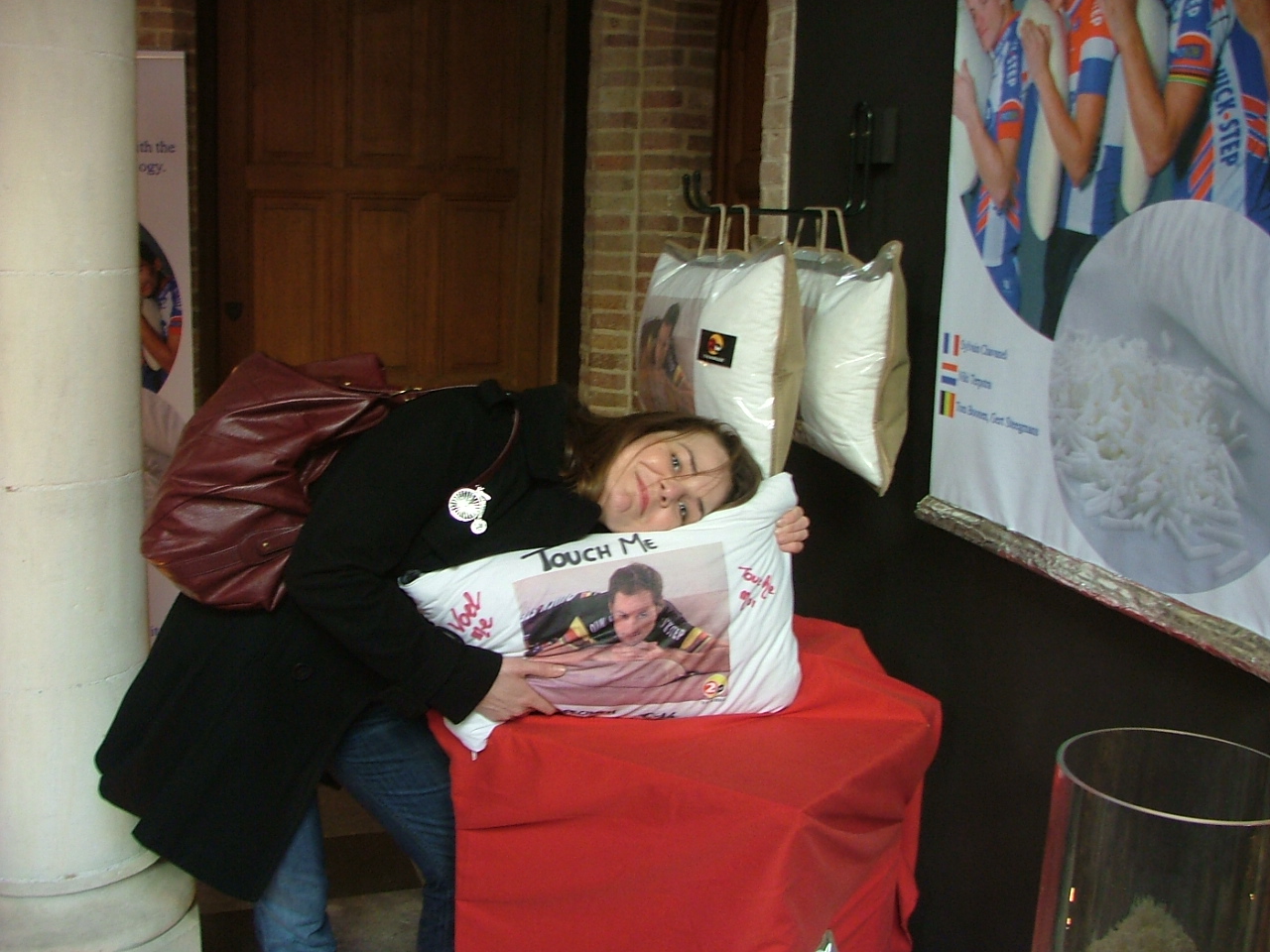
Adjoined to the bar is a gift shop where you can stock up on bottles of the beers you’ve been sampling and other paraphernalia, including Tom Boonen pillows for cycling fans. Mind the step – I once saw a post-Kwak shopper do a full face plant here.
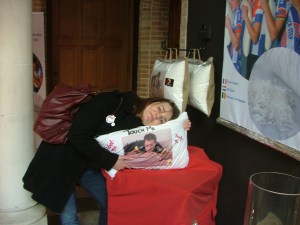
Gifts for the cyclist in your life
Belgium’s other famous export of course is chocolate, and the many chocolate shops of Bruges compete with each other to produce the most imaginative and outlandish window displays. As the Tour of Flanders is always held on the first Sunday in April, my visits always coincide with the period around Easter, a time when this confectionary arms race inevitably reaches a hilarious climax. One year my friend Lisa laughed so hard at the display by the unparalleled Chocoladehuisje on Wollestraat that she was instantly sick.

Laugh ’til you puke
There is also a small and reasonably diverting chocolate museum, the highlight of which is a demonstration of how to make (and eat) pralines by an impressively multilingual chocolatier. There are also some politically incorrect chocolate sculptures of celebrities and the obligatory informational displays about the history of chocolate. The best story is about colonial Spanish ladies who developed a penchant for drinking chocolate in 16th century Mexico. As with anything pleasurable, the local bishop decided it was a bad influence and banned its consumption in church. The inevitable result was that people stopped going to church. Oh, and the bishop was murdered.

Hmmm…
The chocolate museum’s poor relation is the Friet museum, which gives a brief history of the potato and is about as interesting as that explanation makes it sound. However, without visiting I may never have learned that chips were invented in Belgium and mistakenly dubbed French fries by American soldiers unknowingly stationed in Belgium during World War 1, or that the world record for endurance chip frying is 72 hours. The conclusion of some rather disparate exhibits was a collection of fat fryers through the ages, some chip related art and a video of a man playing a tune out on a hollowed out potato. The in-house frituur was deserted except for a hard house soundtrack and one other couple who looked a little lost , presumably having wandered in there by mistake whilst looking for the chocolate museum.
Bruges is also home to several historic churches and world class art galleries – none of which I have visited, to my shame! There’s always next time.
Cycling in the area
Before I forget, this is supposed to be a cycling blog. Bruges gets very busy with tourists at weekends, so a gentle ride into the surrounding countryside makes for a pleasant change of pace and is easy to do whatever your level of cycling ability. A short and very easy ride is along the arrow-straight canal to Damme, a little hamlet 5km northeast of Bruges. To find the start of the route, follow the canal that runs in a north-south direction through the northern half of the old town to the ring road, from where Damme is clearly sign-posted, along wide, traffic-free cycle paths either side of a broad, straight canal (the path on the left hand side as you head out of town is better).
Within minutes you will be cycling though sleepy farmlands where the only noise comes from the quacking of ducks nesting in the bulrushes or the occasional bleating of a sheep. If you find yourself purring along at a reasonable pace without even trying, then beware – you are most likely unwittingly benefiting from a tail wind with the potential to turn into an energy-sapping headwind on the return leg, something whose presence is hinted at by the lines of poplar trees planted with surgical precision to break up the wind as it rolls across the pan-flat Flanders countryside.

Trees you could set your watch by
A windmill and a convalescing shire horse indicate that you have arrived at Damme, a tiny village paved with savage cobbles and featuring a small square, town hall and a few tea shops and bars. In the summer a paddleboat grinds relentlessly up and down the canal from Bruges to pack the area with tourists, but in April Damme is a sleepy and rather lovely place to stop for mid-ride refreshment.
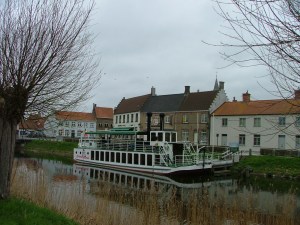
Damme’s hibernating paddle boat
Enigmatically numbered cycle routes branch off this canal-side cycle path all along its length, hinting at further adventures to be had in the area. One option is to press on another 10km from Damme to Sluis, just over the Dutch border and another pretty village offering plenty of options for lunch. I’ve ridden along this route a couple of times and on both occasions have seen the FDJ team out for a pre-Tour of Flanders training ride, so you will be in good company. If you don’t see them here you might see them posing in a pavement café back in Bruges. Oostkerke is another pleasant destination half-way between Damme and Sluis, and likely to be a lot less busy than Damme in high season.

Sluis
Bruges by night
Get your timing right and by the time you get back to town most of the day trippers will have left for the day, leaving you with the pick of the best bars in which to enjoy a pre-dinner beer or six while night falls and the flood lights come on to accentuate Bruges’ fairy tale qualities. Bruges is home to some exceptional restaurants and at weekends at any time of year it is wise to book in advance to avoid disappointment. Bistro Christophe is an elegant yet unpretentious option, and last time we went I ate some delicious tuna carpaccio at Resto Mojo that I still dream about now.
Did I mention that Belgium is famous for producing countless varieties of exceptional beer? And there are several centrally located bars with a drinks menu the size of a phonebook that want to help you discover as many of them as possible. A good one to try is ‘t Brugs Beertje, where the proprietor cheerfully talked us through the many options available whilst reinstating a curtain rail that had just been pulled down by a careering British tourist who’d tried one trappist beer too many. Other good options are Cambrinus and De Garre, the only place in the world that serves the eponymous 11% lager served with a giant frothy head in a balloon glass. Find it down a little alley off Breidelstraat near the Markt.

There’s only one glass, you’re just seeing double
In reality even the “ordinary” bars in Bruges tend to sell a decent variety of very good beers and the fun is in trying out as many as possible to find your personal favourites. For reasons I still don’t entirely understand, many of our nights out have wound up in De Kuppe, a bar of lost souls with a crazy-paved floor and a soundtrack that typically features Carl Douglas, Sade, Flock of Seagulls, OMD and Men at Work.
How to visit
Have I convinced you? If so, Eurostar runs from London St Pancras International to Brussels Midi, and your ticket will cover you for a transfer from here to Bruges. If you want to take your bike, you can either collapse it all into a bike bag and take it on as luggage, or what we normally do is register them as luggage in advance for £30 each way so we can simply ride off at the other end. You can also turn up and register your bike on the day but there’s no guarantee your bike will travel on the same train as you – more details about bikes on Eurostar here.
Bruges isn’t short of hotels but they get booked up quickly so you need to book in advance. We always stay at the Hotel Bryghia, as it’s well located, reasonably priced and they let us keep our bikes in their garage across the canal. As Bruges is such a popular weekend destination, many hotels will give you four nights for the price of three to encourage you to stick around for the quieter periods. Seems rude not to really.
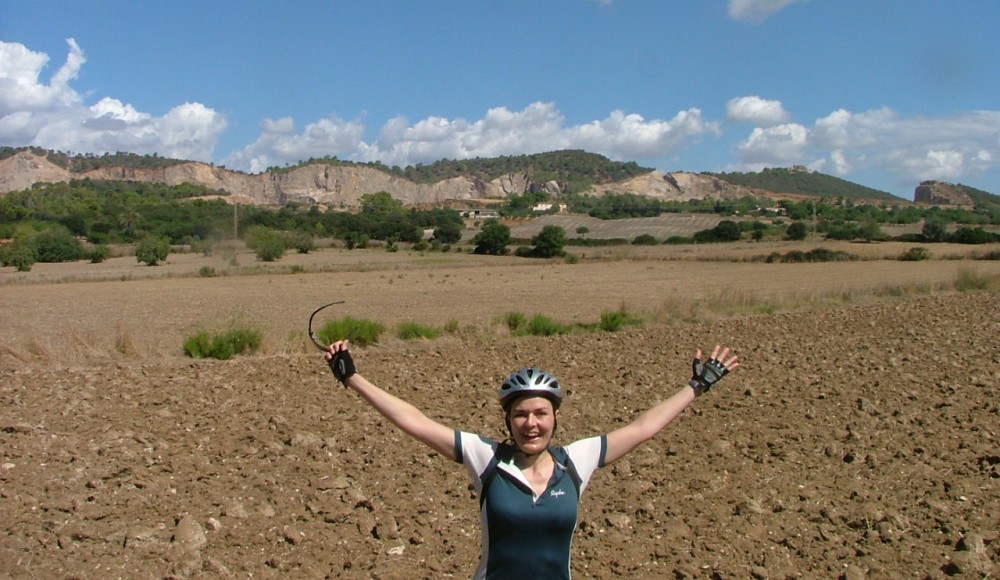






 Bex on Wheels