With the Spring Classics kicking off last weekend, it’s time to revisit my spin around Belgium a couple of years ago to witness some of these fantastic races first hand. Having cycled from Britain to Bruges, spent a couple of days there and taken in the Tour of Flanders, the next leg of the journey was to cycle on to Ghent, the third biggest city in Belgium and one of the most bicycle-friendly cities in the world.
Why visit
In a previous post I have waxed lyrical about the glories of Bruges and in many ways much of what is true for Bruges is true for Ghent. In medieval times it too grew rich off the cloth trade (until its citizens fell out with Holy Roman Emperor Charles V (or Charles Quint) over taxes and trade began to move to Antwerp). As a result it has an imposing and beautifully preserved historic centre comprising three interconnected squares and grand churches featuring priceless works of art, including Van Eyck’s The Adoration of the Mystic Lamb. As in Bruges, I have failed to visit said priceless art because I’ve been too busy enjoying the bar culture to be found in its similarly appealing gabled canalside hostelries.

Ghent does canals just as well as Bruges

And churches
Ghent is beautiful, however it feels more lived in and has more soul than Bruges, which is so preposterously perfect that you sometimes forget people actually live there and it’s not just laid on for the tourists. Ghent is bigger and busier and comes with the lively but laid-back feel you would expect from Belgium’s biggest university town, yet there are surprisingly few tourists which makes for an altogether more relaxed experience.
It is also a fantastic and stress-free place to cycle; over 300km of cycle lanes criss-cross the city, often segregated from the traffic (although drivers are considerate when they’re not) and motor traffic is banned from the city centre.
Oh, and it has a castle.
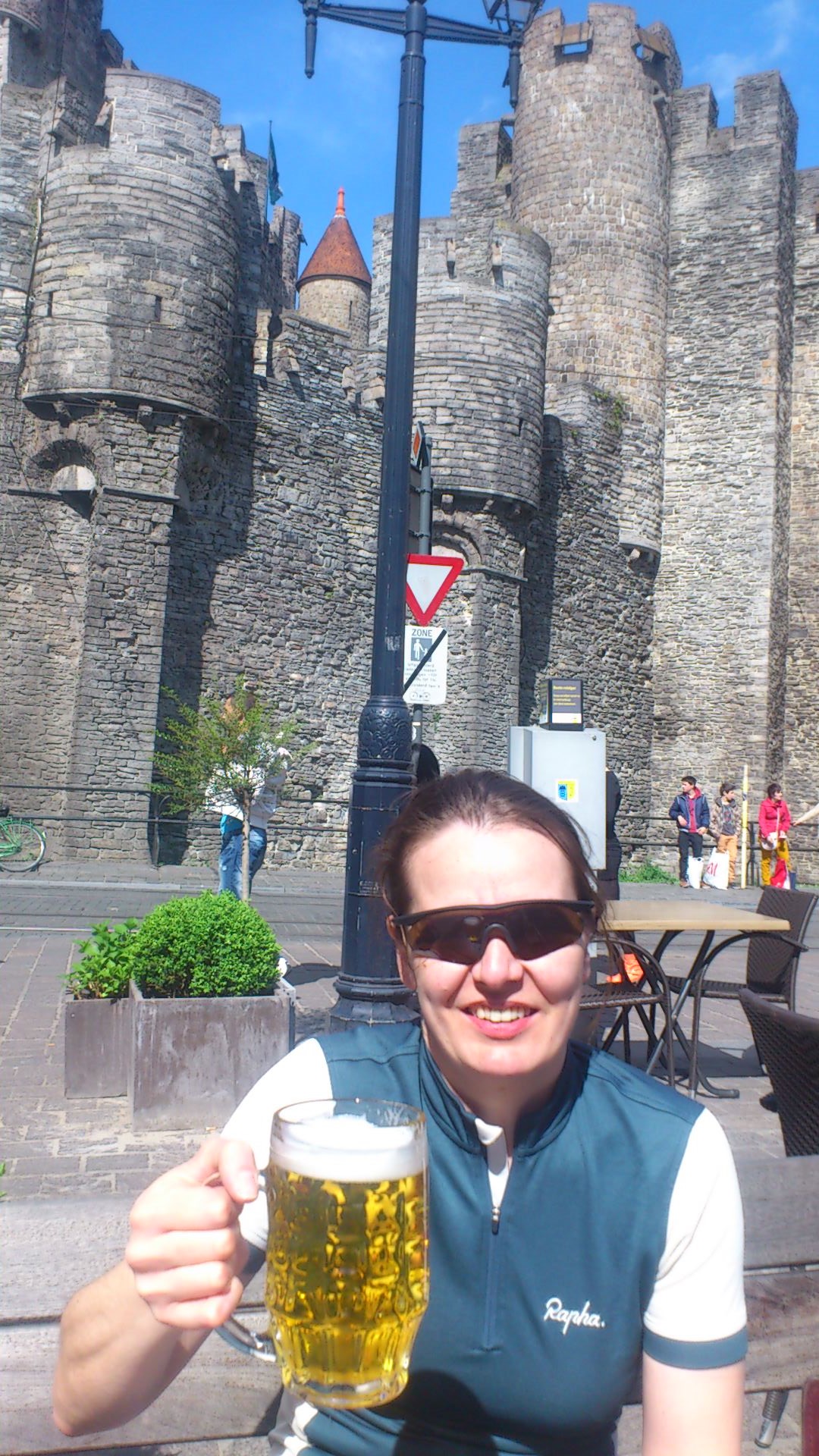
Enjoying a post-ride beer by Ghent castle
For the pro-cycling fan, Bruges may have the honour of hosting the start of the Tour of Flanders, but Ghent has a longer standing relationship with both this race and Flemish cycling in general, no doubt due in part to its location at the very heart of West Flanders. Bruges has only hosted the start since 1998, whereas Ghent hosted every start between 1913 and 1976 and usually the finish too until 1973.
The Tour of Flanders may have moved on but a trip to Ghent can still be combined very easily with some pro- race action. A good bet would be to visit at the end of February for the Omloop Het Nieuwsblad, which starts and finishes in Ghent and uses many of the same stretches of cobbles and climbs as the Tour of Flanders The next day you could either take part in the sportive or hop on a train to Waregem, Harelbeke or Oudenaarde to catch Kuurne – Brussels – Kuurne as it whizzes by. A trip to Oudenaarde would also give you the opportunity to visit the wonderful Tour of Flanders museum – more on which in a later post.
There’s also Gent – Wevelgem at the end of March, although this race no longer starts in Ghent but in Deinze, a 15 minute train ride away. In fact, Gent Sint Pieters station in the south of the city is well connected to many other cities in the region as well as Brussels, making Ghent a good base from which to get out to see lots of races during the spring classics season.
Cycling from Bruges to Ghent
The 45km ride from Bruges to Ghent is a straightforward and easy one once you find the right route out of town, taking at least an hour for which has become a traditional start to most of our cycle-touring adventures. To avoid doing the same, head to the south of town and the appropriately named Gentpoort, one of Bruge’s four remaining medieval gates (which is part of the Museum of Bruges if you want to drop in and look around). Take the bridge over the canal here and turn right on to the cycle path on the far side that runs alongside the ringroad. Keep going as the ringroad crosses over another canal and passes a coach park on the left hand side. You are looking for a left-hand turn shortly after this called Vaartdijkstraat which runs along the right hand side of a canal that leads southeast all the way to Ghent.

Passing through a four-horse town
Once on the right track you are very quickly out of civilisation and into farming territory, passing though just a handful of tiny sleepy towns along the way. The quiet road gives way to a beautifully paved cycle path and it’s very difficult to get lost; the route hugs the canal almost the entire way and the few deviations are well sign-posted.
The route is unremarkable but peaceful and pleasant and ideal for a Tour of Flanders hangover.
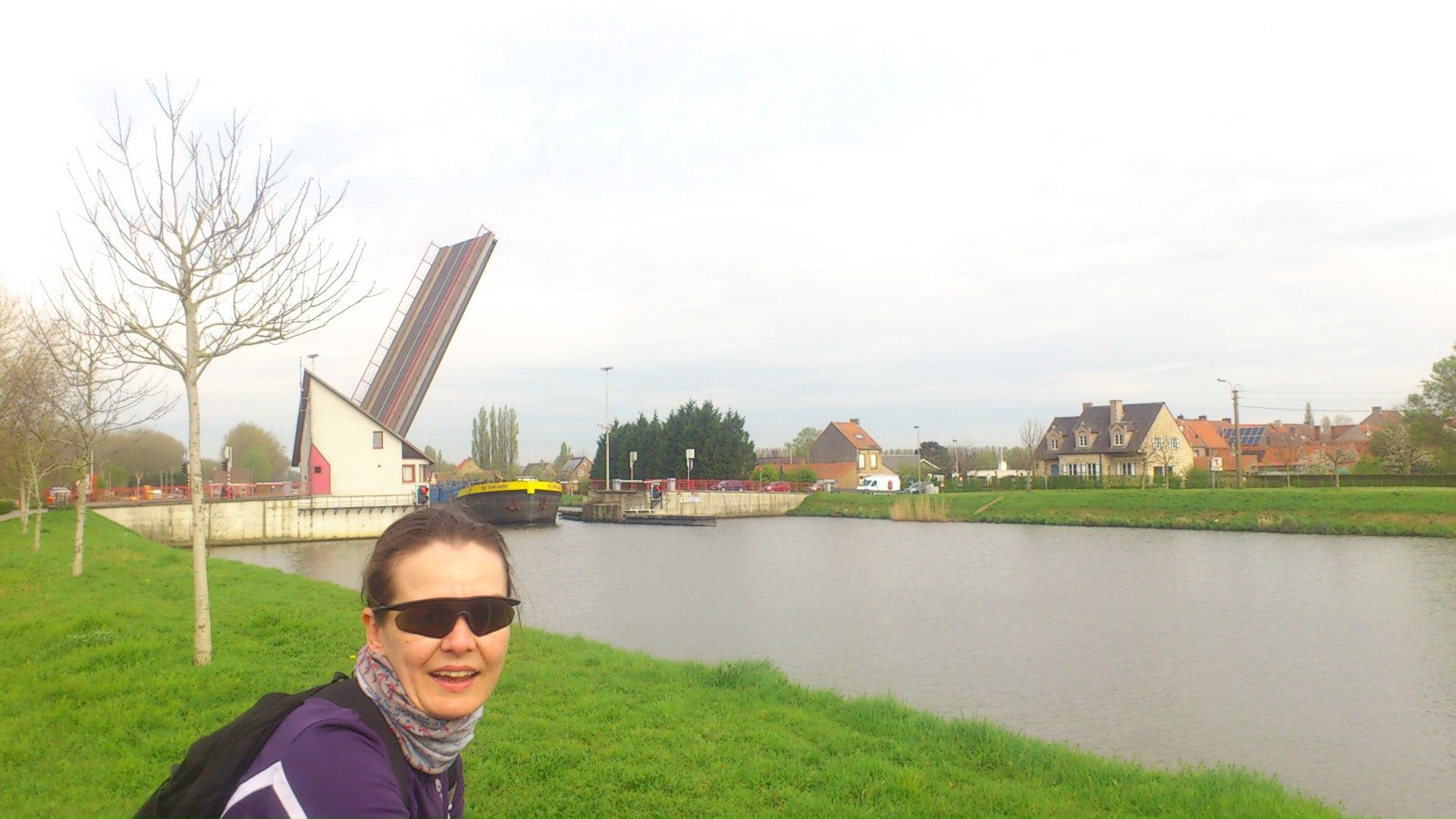
The most eventful thing to happen on the canal all day
About two-thirds of the way along is a peculiar little cycle museum that appears to have been set up in someone’s shed. Like all museums in Belgium on a Monday, it was shut when we passed by, much like many of the shops so stock up on waffles and Mattentaart before you set off.

One of Belgium’s many tributes to the bicycle
As you approach the outskirts of Ghent the canal-side path becomes wider and busier with semi-professional looking lycra-clad men zooming up and down. The commitment to cycling is evidenced by the large fishing-nets alongside the track into which you’re intended to fling your litter as you pass, sparing you the pedestrian humiliation of having to stop to put it in a bin. It’s not long before one of those rather pleasing town-in-silhouette road signs that you see all over Belgium show that you have made it to Ghent.
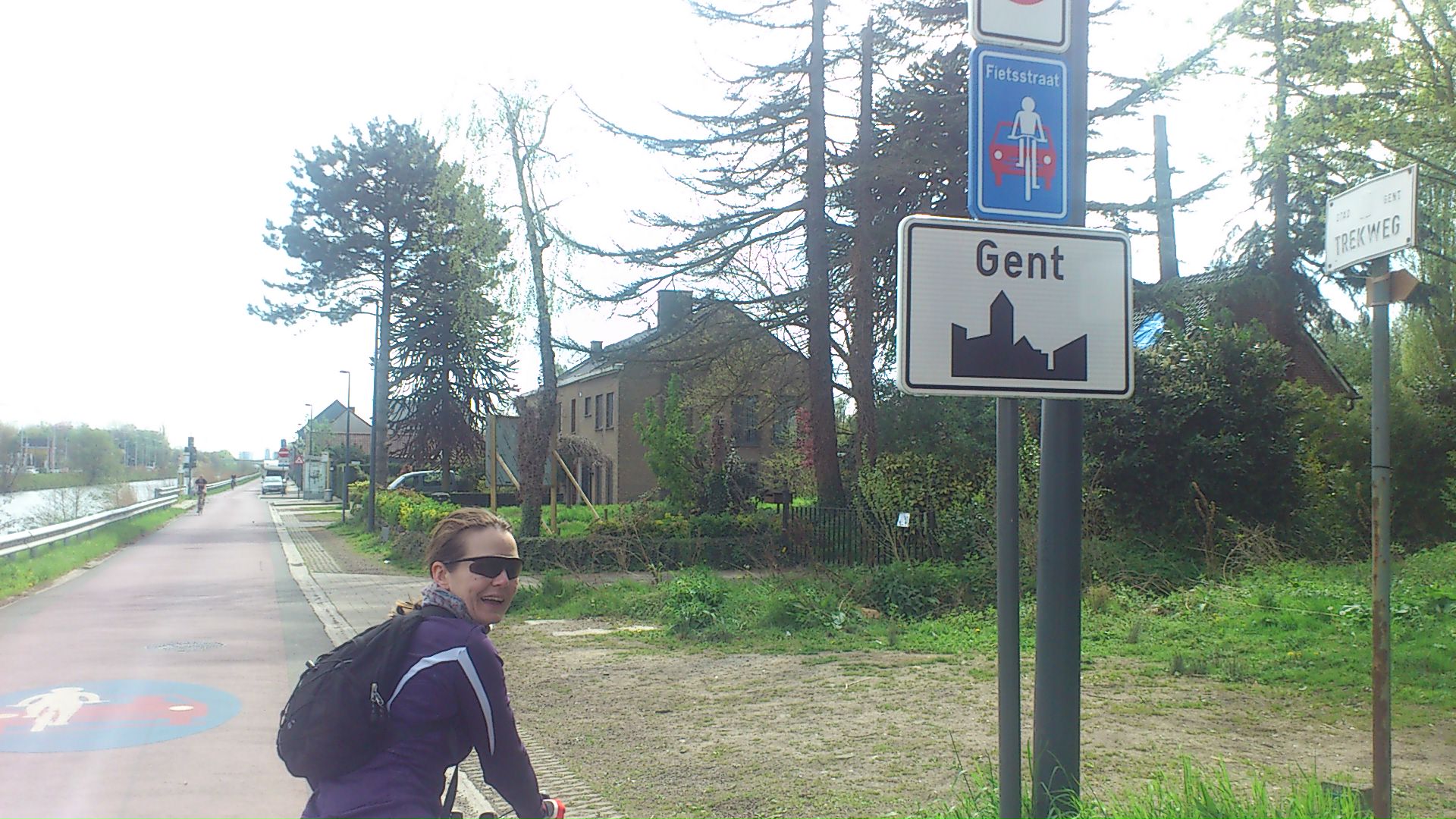
Welcome to Ghent
Velodromes old and new and other things to see
Ghent is packed with historic buildings, quaint cobbled streets and a multitude of fascinating sites and galleries that someone other than me is probably better placed to talk you through. The focus of this blog is cycling and you could do a lot worse than to take advantage of the largest car-free city centre in Europe by spending a day just tootling around on two wheels drinking it all in.
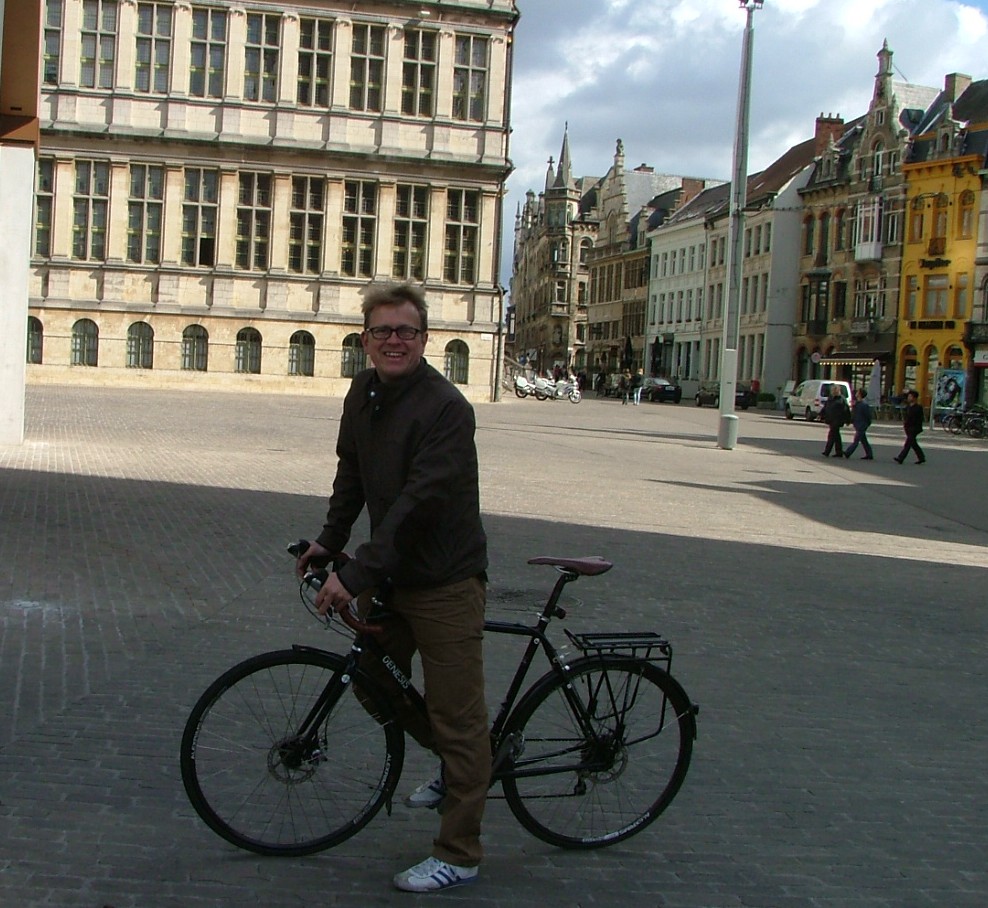
Not a car in sight
Beware of the cobbles though – despite having completed the Tour of Flanders sportive on two occasions with no mishaps, the devilish combination of cobbles and tram tracks by the castle was enough to send me flying across the road with my legs in the air so that all of Ghent are now aware of the very tiny space-saving pants I wear when cycle-touring!
To explore beyond the city centre, why not start by adding to the tally of cyclists that are counted daily as they pass along the cycle path on the left hand bank of the Coupere canal (if you have previously followed the route along this canal from Bruges into the heart of Ghent then you may have already seen this digital display).

The 187th cyclist to pass that day
Many professional bike racers call Ghent home and you may well spot a few tearing up the canal tow paths or the banks of the Sheldt river towards Oudenaarde. Two days after the Tour of Flanders we saw the Garmin team out and about not far from the Vlaams Wielercentrum (Cycling Centre) Eddy Merckx, a modern indoor velodrome named after Belgium’s (and the world’s) greatest ever cyclist.
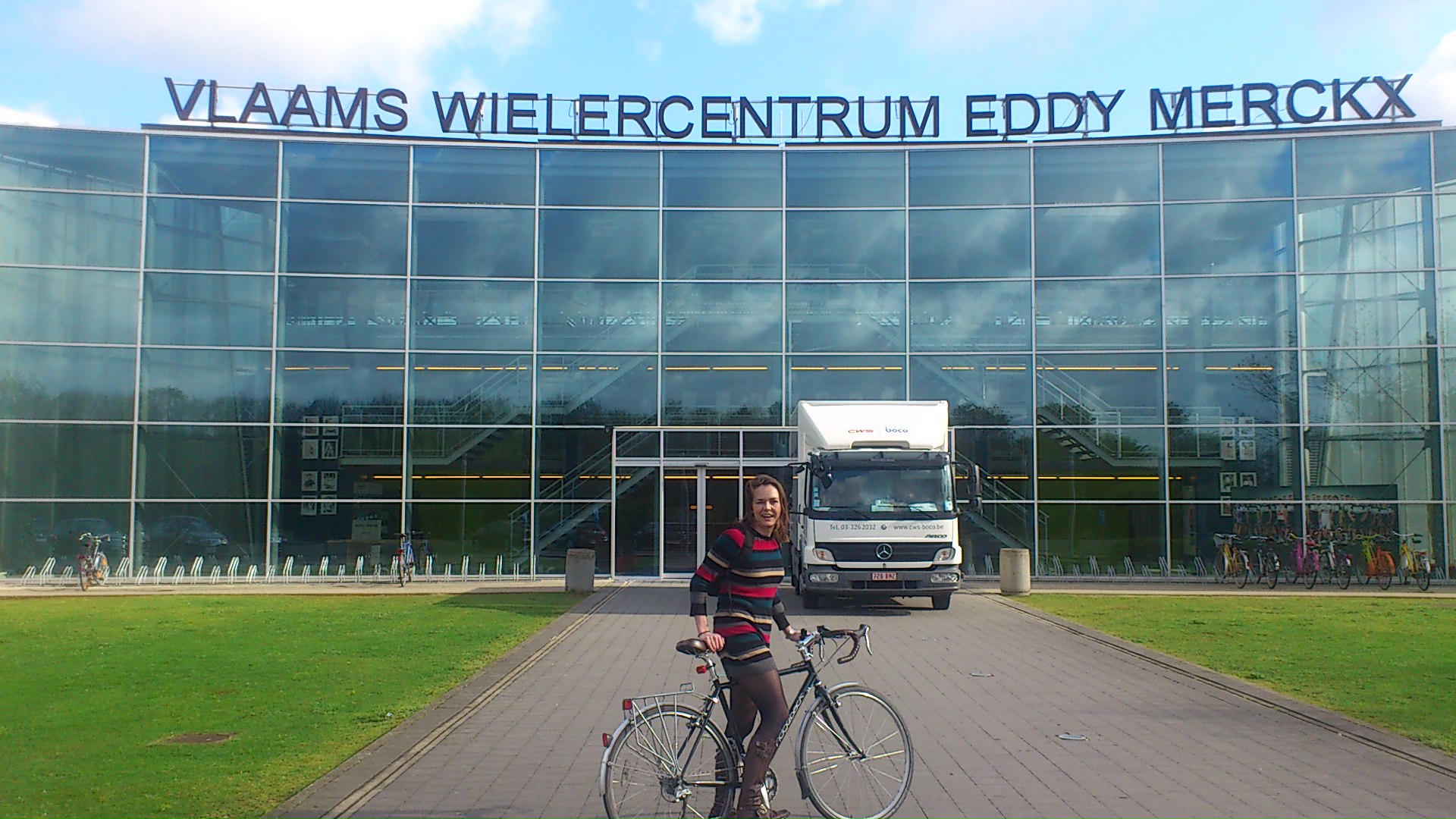
A fitting tribute to a great man
This is in Blaarmeersen in the west of town and tends to be just off many tourist maps. Follow the Leie river along the north bank and look out for a right hand fork and signs to the Recreatiepark, the large green zone in which the velodrome sits alongside other leisure sites such as a huge swimming lake which is supposed to be very popular in summer (although not so much in April, brrrr!).
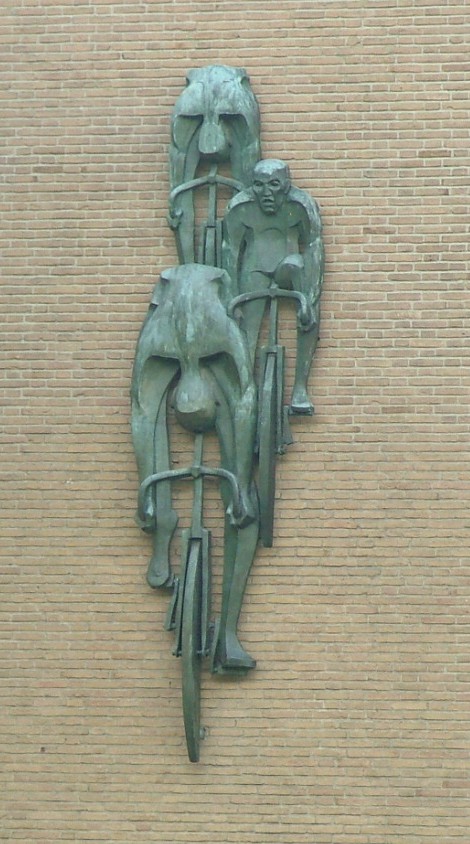
Anyone can wander in for a quick look at the track and a few posters and sculptures that will be of interest to pro-cycling fans.

Inside the Eddy Merckx cycling centre

Not convinced by Quick-Step’s latest signing
Follow the Leie back towards town and turn right on to Ijzerlaan in the direction of the Citadelpark. On the corner with Kortrijksesteenweg you will find the De Karper café, owned by Ronie Keisse, father of Iljo Keisse who rides professionally for Etixx – Quick-Step and excels at track cycling.

Iljo Keisse’s jerseys adorn the walls of De Karper
By all accounts De Karper is a thriving sports bar that is packed to the gunnels when there’s racing on the TV. On a Tuesday lunchtime however there was just us and a man with a thousand yard stare slowing sinking Kwaremonts at the bar. All of us were served by Iljo’s very nice sister, who gave us a Tour of Flanders poster and other memorabilia to take home.
Further down the road is the Citadelpark, a lovely green space that contains Ghent’s Botanical Gardens, a couple of museums and galleries and most importantly for cycling fans, the Kuipke velodrome. This is Ghent’s older velodrome that is only used these days to host the Six Days of Ghent in the 3rd week of November each year. Part track-meet part stag-do, this is high on my to-do list, but on an April visit I had to make do with looking at the building from the outside.
‘t Kuipke
Eating and drinking
I have seen ‘t Velotjee described in one guide book as “a bike workshop-cum-bar”, which is possibly the most wonderfully generous and optimistic description of it ever written. Lonely Planet more accurately describes it as “an escaping jumble sale”. Over the course of 25 years, the owner Lieven has filled his property of unknown dimensions with an assortment of bric-a-brac that would make a house clearance professional hastily revise his rates. Yes, there are plenty of rusting antique bike frames hanging from the ceiling and bits of componentry scattered here and there, but there are also countless dusty candelabras and other ecclesiastical curios plus random piles of clothes, toys and other junk.
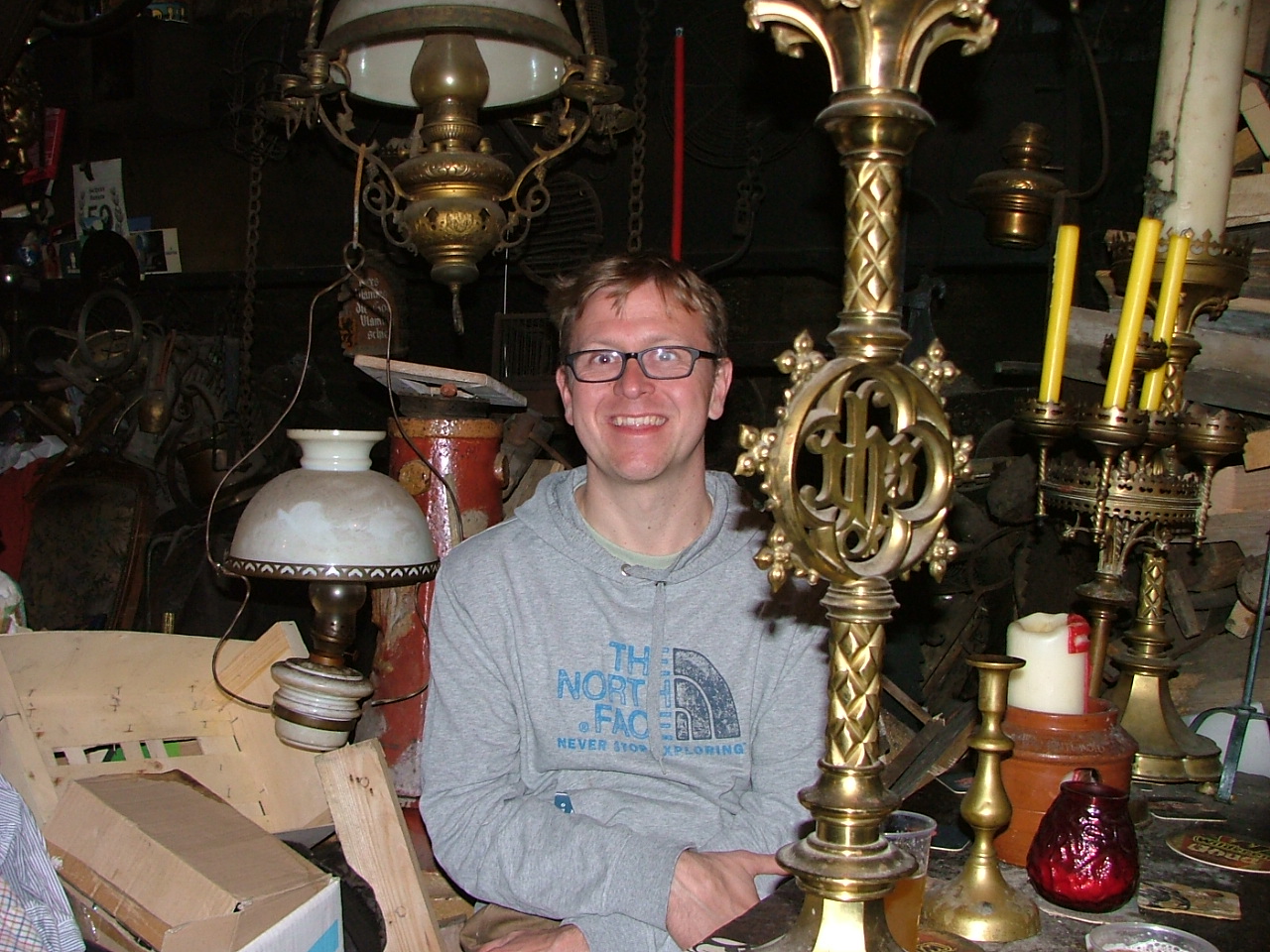
Enjoying a beer at ‘t Velootje
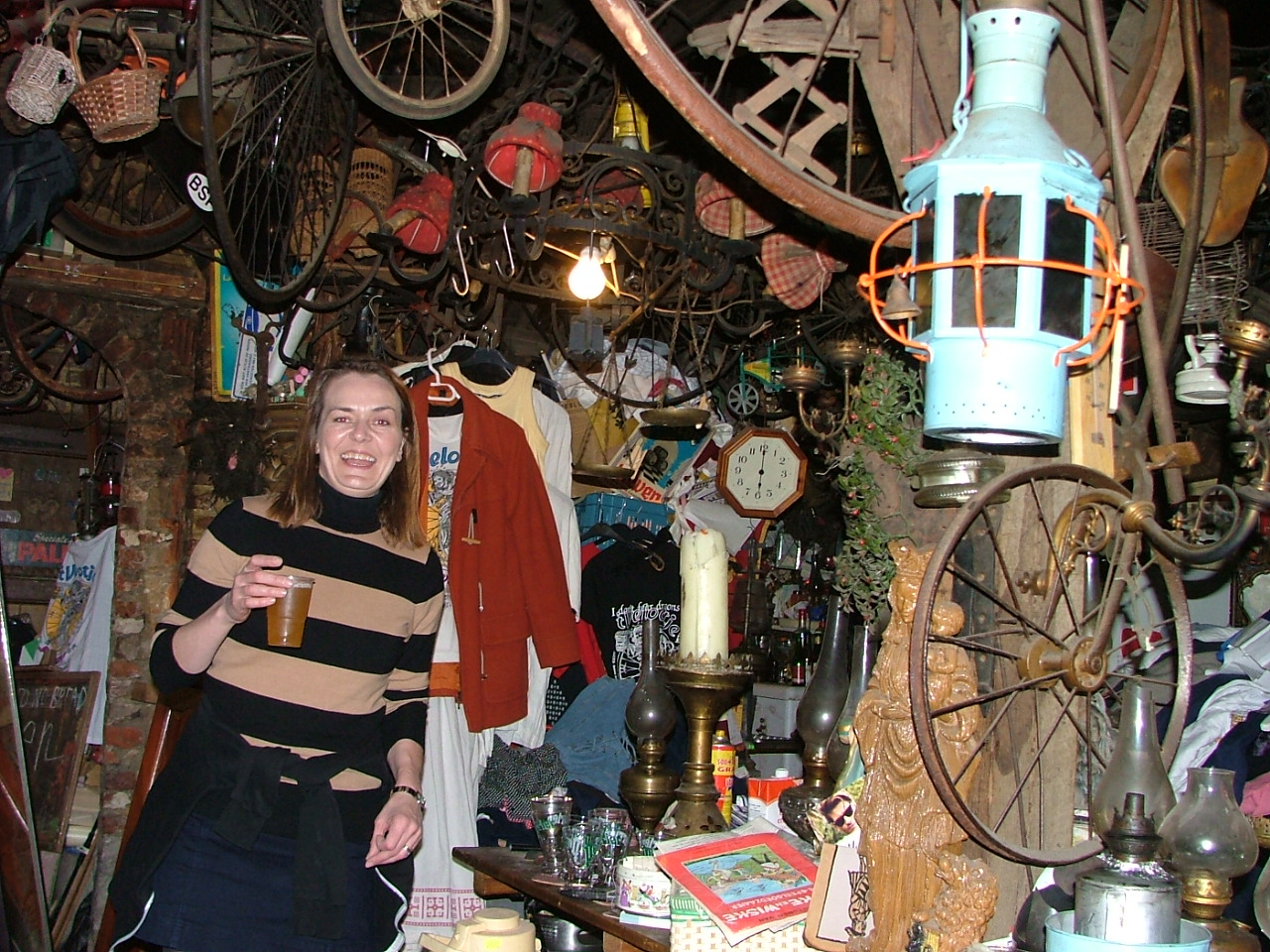
Did anyone see where I left my coat…?
It’s certainly unique and worth a visit if you happen to find it open (as you can imagine, its owner is somewhat eccentric and the opening hours likewise). Find it on Kalversteeg in the lovely twisting cobbled lanes of the Patershol area just to the north of the historic centre. Not for the asthmatic.

‘t Velootje from the outside
Patershol is a good place to head for eating and drinking generally; if you want cheap and cheerful then Amadeus on Plotersgracht serves all-you-can-eat ribs in historic and convivial surroundings. Not far away in Vrijdagmarkt the atmospheric and cosy Herberg de Dulle Griet serves the hundreds of different beers that you would expect from any self-respecting Belgian pub. If you want a glass of Kwak in one of the special extra-long glasses, be prepared to leave your shoes as a deposit, which will be hoisted to the ceiling in a cage (and left there should you fail to give the glass back).

Say goodbye to your shoes after one Kwak too many
The excellent Frituur Jozef operating out of a trailer across the square will supply you with chips and a choice of over 20 different flavours of mayonnaise to fuel your walk home.
How to visit
It’s not compulsory to cycle from Bruges to Ghent, even though I heartily recommend it! For a more direct route from the UK, Eurostar runs from London St Pancras International to Brussels Midi, and your ticket will cover you for a transfer from here to Gent Sint Pieters in the south of the city, a short bike or tram ride from the centre. If you want to take your bike on Eurostar, you can either collapse it all into a bike bag and take it on as luggage, or what we normally do is register them as luggage in advance for £30 each way so we can simply ride off at the other end. You can also turn up and register your bike on the day but there’s no guarantee your bike will travel on the same train as you – more details about bikes on Eurostar here.
However you get here and whatever you choose to do, make sure you spend some time on two wheels – you will never find another city so beautifully set up for it.
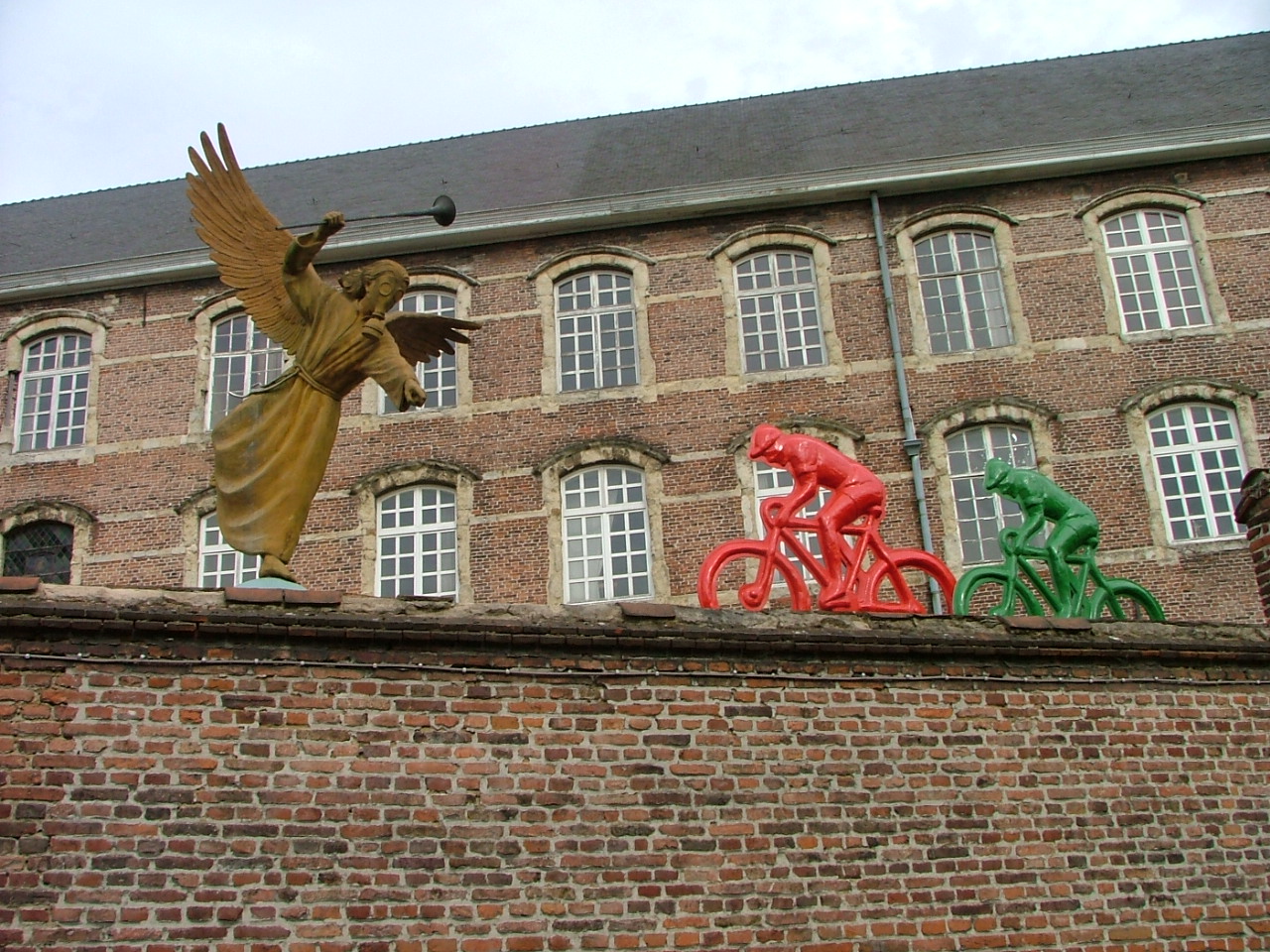
Ghent is cycling heaven
 Bex on Wheels