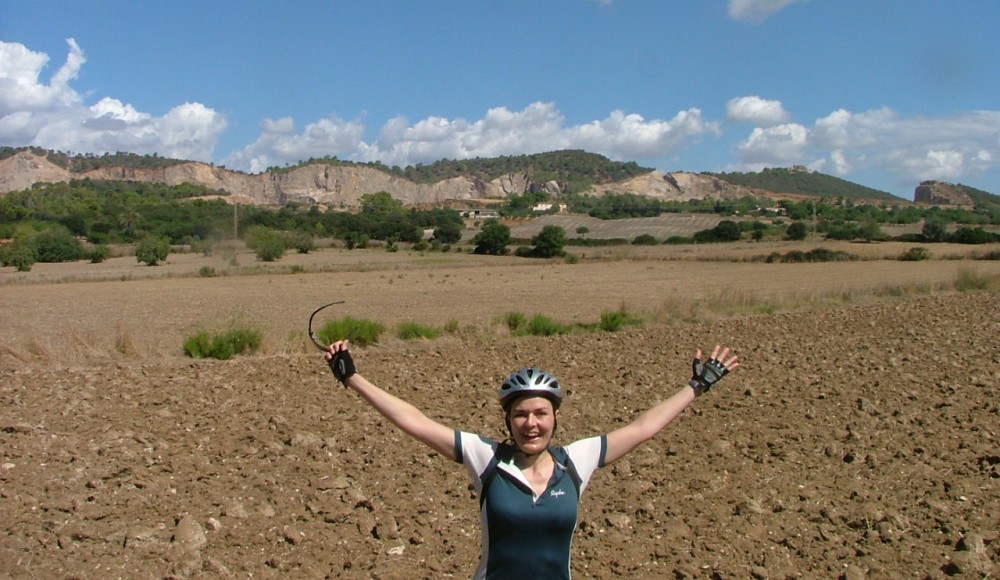
Readers of my last post will know that I’m a big fan of the Tour of Flanders and make the trip to Belgium to watch it live each year. This year was no exception, but rather than repeat the sportive-on-Saturday-watch-on-Sunday long weekend in Bruges that we’ve done for the last couple of years, my husband John and I decided to try something different this time. Inspired by our experience of cycling from London to Paris last year, we turned our annual pilgrimage into a cycle tour of Western Flanders and parts of northern France, taking in the Scheldeprijs and Paris – Roubaix races as well as the Tour of Flanders and other highlights of this lowland.
It will take me several posts to regale you with all the tales from this adventure, so I’m going to start with the story of how we got to Bruges, starting point of the Tour of Flanders and therefore our initial destination. In previous years we have travelled there from London on Eurostar, but we found it immensely satisfying and very straightforward to ride there under our own steam this time. The journey took us a couple of days, so if you’re considering doing the same (which I’d heartily recommend) I hope you’ll find the following tale of half-arsed preparation and lessons learned informative!
The road from Canterbury
The biggest headache of any “London to…” cycling itinerary is usually getting out of London, so we decided to start instead from Canterbury, taking the 10.20am train there from London Victoria, on which bicycles are permitted. From there we picked up the cycle route towards Dover, which I believe mainly follows regional cycle route number 16. Personally I like the security of a paper map in addition to online sources; if you’re the same the route is clearly marked on map number 179 of the Ordnance Survey Landranger series.
Although not traffic free, the route is mostly along quiet country roads through rural Kent, which was just starting to show the first green shoots of spring on a cool but sunny day. Part of the scenic route is shared with the North Downs Way and trundles through farmlands and small villages, some of which were still loaded up with sandbags following the recent heavy rains and flooding in the area. One of the joys of cycle touring is the unexpected places you stumble across along the way, and sure enough we found ourselves having a delightful alfresco lunch at The Duck in Pett Bottom, a pub mentioned in James Bond’s “obituary” in “You only Live Twice” (Ian Fleming apparently wrote the novel whilst living in the village).

The Duck at Pett Bottom
We were booked onto the 4pm ferry to Dunkirk and as the route to Dover looked to be a straightforward 35km run we were initially confident of making it there in plenty of time. Inevitably though we had spent an obligatory half an hour or so trying to find the right route out of Canterbury and lost a little more time having an overly leisurely lunch. The realisation that we were probably going to miss the ferry set in at almost exactly the same moment that the route started to become more undulating; not massive hills by any means but they felt almost Pyrenean when in a hurry and loaded with full panniers! At quarter to four we finally reached Dover castle and shot down the steep hill into town like Vincenzo Nibali after a bank robbery.
After negotiating the at times terrifying cycle route into the port (at one point you are required to follow a red line along the right hand side of the road – exactly where all the lorries are steaming along) and exchanging various bit of paper with men in various prefabricated buildings, we were comically late for the ferry. Fortunately it didn’t seem to be in any hurry to leave on time and there were plenty of vehicles, mainly lorries, still rolling on when we flustered our way to the dock. We locked up our bikes in the racks provided on a lower deck and headed up to the almost spookily under-populated passenger deck for a relieved beer.
Finding Dunkirk
A couple of hours later we docked in Dunkirk but it was another hour before we could disembark, as all the lorries were let off before us for obvious safety reasons. The clearly signposted and segregated bicycle lane to the town centre that I had been hoping for was nowhere to be seen, so we rode a couple of miles along the main road out of the port until we hit a T-junction next to an oil refinery whose gas flares burned eerily in the encroaching twilight. It wasn’t obvious where to go next but we turned left at this junction and after another couple of miles picked up a bike path that led along the top of a dike towards town. What we hadn’t anticipated was that it was a good 15km or more from here until the town centre, which meant a surreal but highly memorable ride for over an hour in darkness, the sound of the surf rolling in at our left competing with the roaring of oil refineries to our right, any smell of sea air obscured by their sulphurous emissions. It was like cycling in Bladerunner.
After the traditional half an hour cycling around the deserted town centre looking for our hotel, we checked in and went out for dinner at a nearby brasserie on Place Jean Bart which was pretty much the only place open at this late hour but was fortuitously serving a delicious special of chicken and cous cous (much better than it sounds!) and a good selection of Belgian and northern French beers. Just the ticket at the end of a long day.
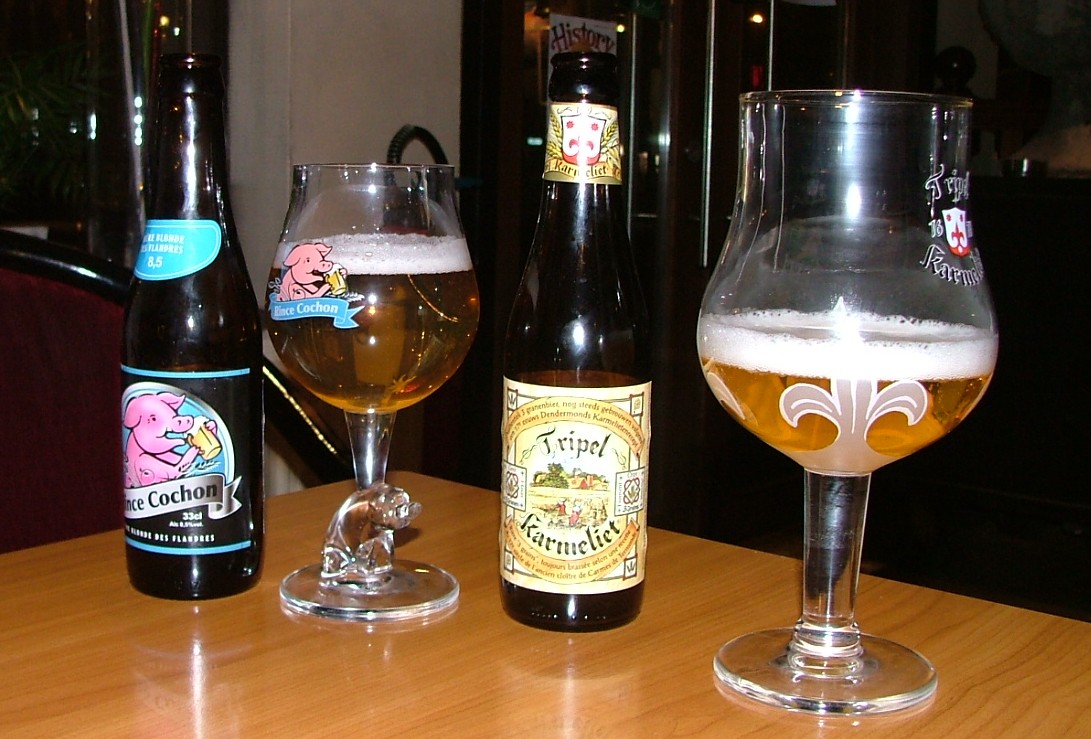
The first of many!
Bruges or bust (accidentally via Ostend)
Dunkirk was a bit more lively the next day and friendly locals, seeing our panniers, were curious about our journey. We needed to reach Bruges by the end of the day and still had a way to go, so headed north along the coast towards the border with Belgium near De Panne. At first the route hugged the shoreline, a poker straight line between sand dunes and a broad sandy beach exploited by land sailors and kite fliers. After a while it turned inland, conveniently passing a patisserie just in time for breakfast, before winding through pockets of woodland and mothballed holiday camps where signs in English remind dim-witted British tourists to drive on the right.
Before long we arrived at the border and took the first of numerous wrong turns, confounded by the array of equally appealing cycle paths to choose from, mostly purpose built and traffic free. Belgium is covered in an extensive network of dedicated cycle routes that will make any British cyclist used to strips of pot-holed tarmac at the edge of busy roads that evaporate just as you arrive at a busy junction weep with pathetic gratitude. Routes are numbered and constantly interconnecting without necessarily spelling out which towns they are leading to, so even though cyclists are so well catered for you do need a map to find your way over any distance. Detailed printed maps of the Belgian cycle path network (or Fietsroute Netwerk) are available to buy in tourist offices; we bought ours in advance from the ever marvellous Stanfords.
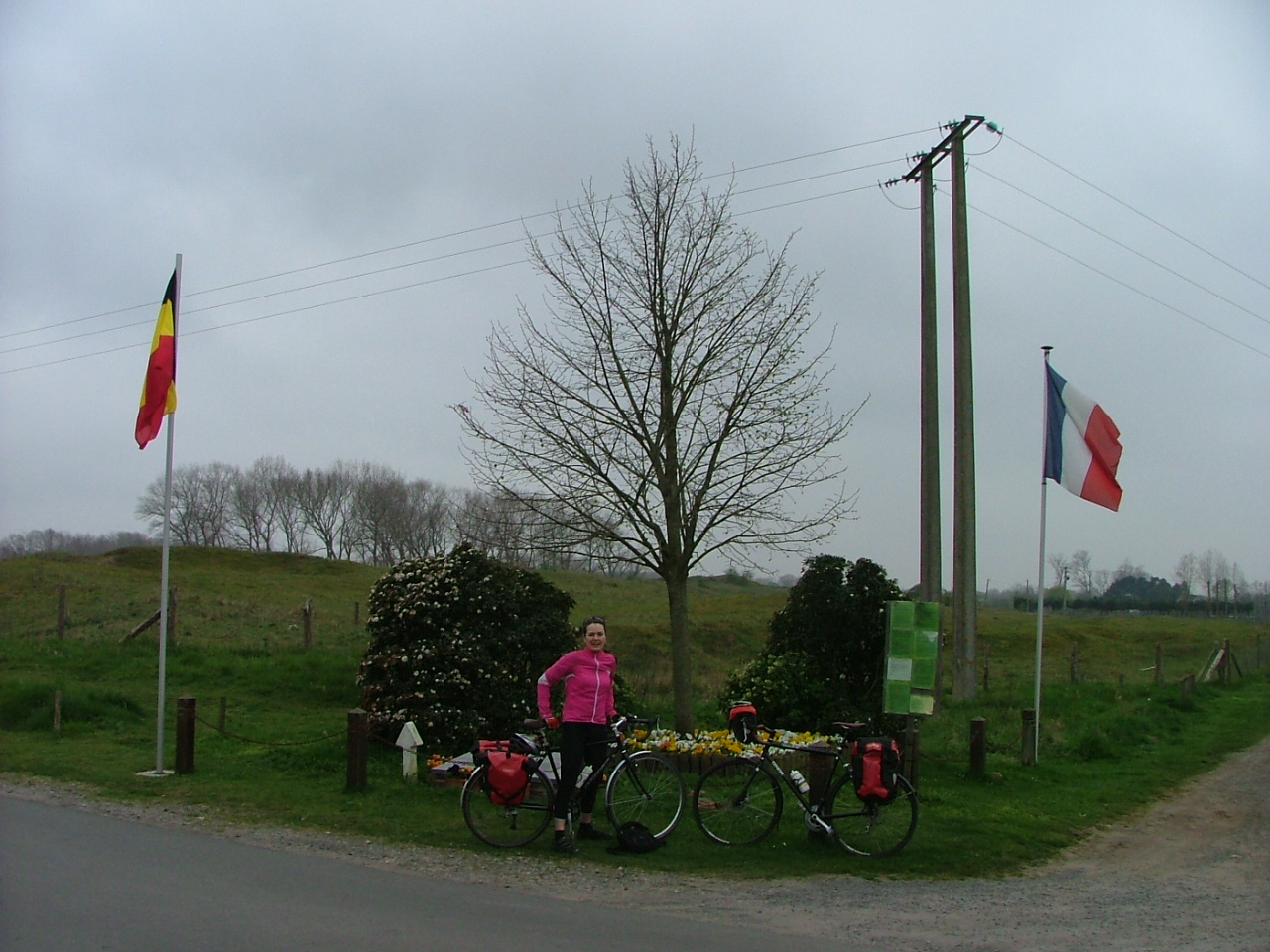
If it’s Tuesday this must be Belgium
From here we decided it would be worth making a relative diversion further inland towards the town of Veurne for a spot of lunch. Like its more famous neighbours Bruges and Ghent but on a smaller scale, Veurne sports all the typical features we’ve come to know and love from an historic Flemish market town, including a cobbled market square lined with restaurants and bars in old gabled townhouses, a Unesco listed belfort, town hall and a couple of churches. As much of the Belgian coast is otherwise unremarkable, Veurne is well worth a trip if you’re in the area.
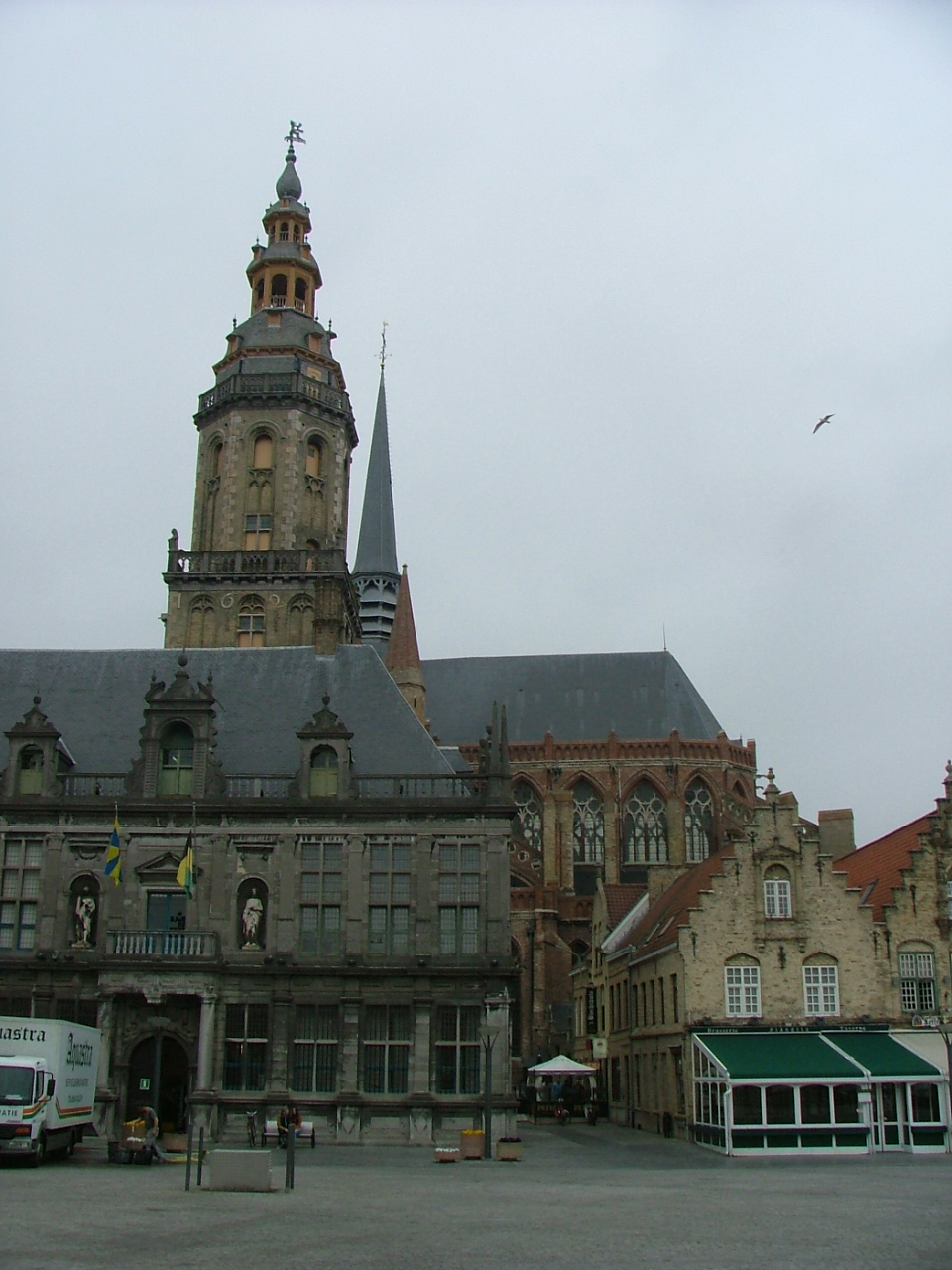
Veurne’s 17th century belfort, a Unesco World Heritage Site.
At this point we went a little off-piste, as our collection of maps didn’t cover the relatively small area between Veurne and Oudenburg, where we knew we could pick up a path to the main Gent-Brugge-Oostende canal that would take us all the way to Bruges. However, we were reasonably confident that if we followed the canal from Veurne towards Nieuwpoort, we could pick up another path from there to Oudenburg. And so we set off along the first of many canal-side cycle paths, dodging the occasional sheep wandering across from neighbouring fields.
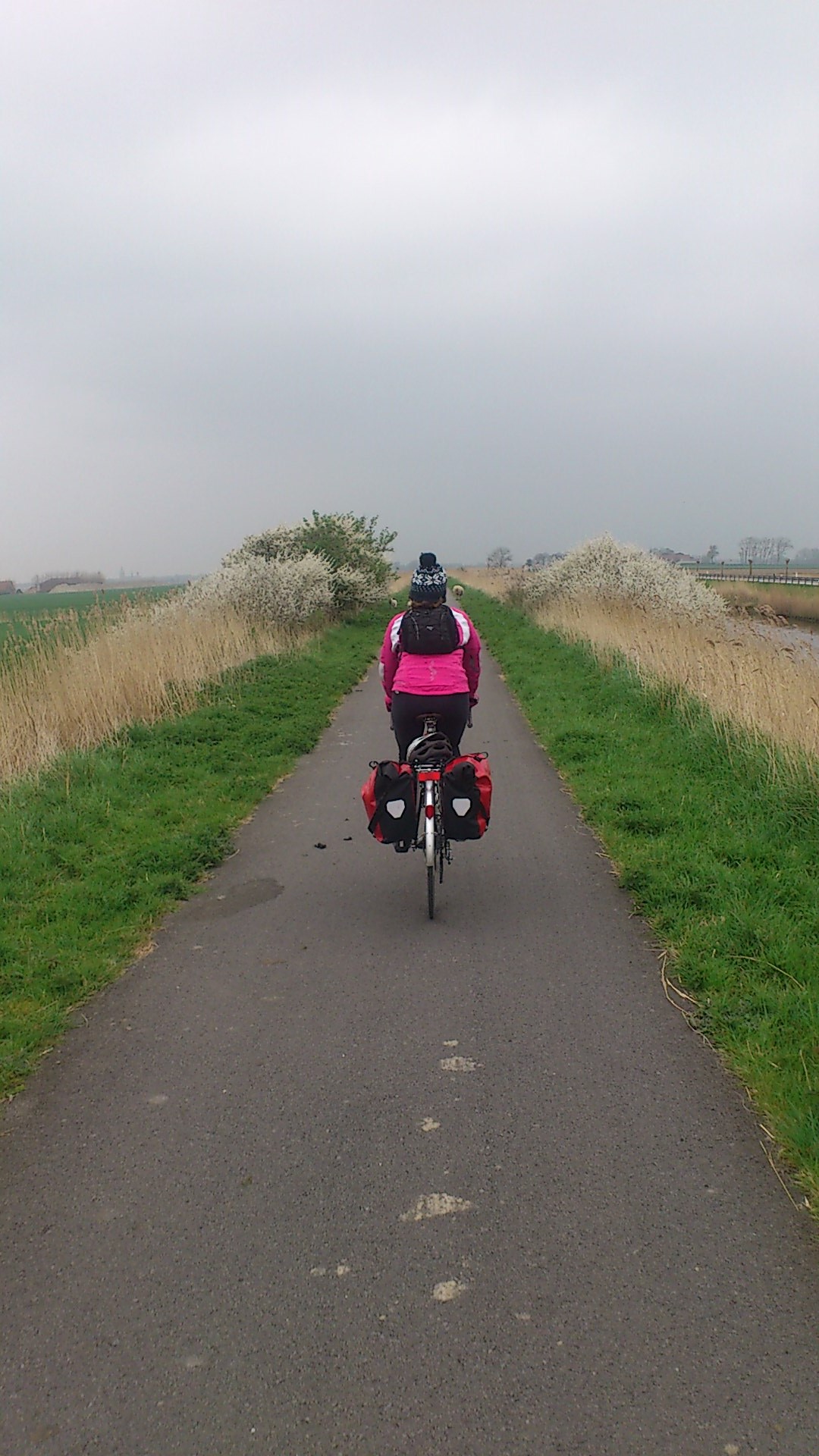
Even with paths like this, we still managed to get lost.
It was whilst deliberating whether or not to ignore a sign that wanted to divert us away from the canal we thought we needed to follow that we met Kris. Kris was a passing cyclist, a friendly Flemish fellow who was determined to help us whether we liked it or not. Were we looking for the sea, he wondered. On learning that our ultimate destination was Bruges, Kris was insistent that we should ride along the seafront all the way to Ostend and pick up the canal from there: “I will show you!”.
Despite recovering from his second hip replacement in as many years, Kris could cycle (for rehabilitative purposes) at a decent pace and deftly guided us to the coast at Westende, about 15km down the coast from Ostend. As he had promised, it was possible to cycle from here along a traffic free promenade all the way to Ostend, which anyone who has choked on fumes whilst trying to have a nice ride along Brighton seafront on an average weekend would definitely appreciate. It’s not a particularly attractive stretch of coast though – there’s a lovely wide beach of white sand but the Belgians have attempted to make the most of their relatively short stretch of coastline by building an almost continuous stretch of rather unforgiving high-rise hotels along its length.
Still, the coast is not without its attractions and I imagine it’s a lively place in summer. Around Middelkerke there is a procession of bronze statues of cartoon characters, which is added to each summer when the annual comics festival is held there. Belgium has a long and illustrious history of comics – according to Wikipedia (so it must be true), comics constitute 14% of annual book sales in Flanders.

That’s not Tintin
Just outside Ostend there was a break in the endless stretch of hotels to accommodate the site of the Atlantic Wall sea defences rebuilt by German occupying forces in World War II, the bunkers and gun emplacements clearly visible between the dunes from the roadside. Shortly afterwards we arrived in Ostend proper, passing the grand but slightly faded Thermae Palace Hotel. This 1930s spa hotel was the setting for cult saucy vampire movie Daughters of Darkness. There is also an amusingly Z list walk of fame on the promenade outside.

Big in Belgium?
Ostend looks to be a lively place but as we’d not intended to be there in the first place we were keen to press on to Bruges. We found a cycle route along a canal that seemed to be heading roughly the right way, and when it started branching off in various directions we followed some earlier advice from the ever-helpful Kris and followed the signs in the direction of Bredene Sas. Sure enough, a brief diversion to avoid a mysteriously absent bridge aside, we were soon rather triumphantly picking up our first signs to Bruges and for the rest of this day at least we were done with getting lost. After a few well-signed miles on segregated bike paths through the industrial outskirts of Ostend, we finally made it onto the quiet canal-side tracks that we’d been craving, which covered the final 20km or so all the way to the heart of Bruges.

Finally on the right track
We’ve been to Bruges a few times now and it’s always a pleasure to be back, so much so that I intend to dedicate all of my next post to the city and the marvellous cycling opportunities to be found in its environs. For now I will simply say that we celebrated the end of a long but interesting and very satisfying day in the saddle with rather too many delicious Belgian beers in some of the many obliging hostelries of Bruges and had a well deserved lie in the next day!

Not the first time I’ve travelled home on a beer scooter!
 Bex on Wheels